Electra highlights the EL9’s ultra-short take-off and landing capability as it targets Pentagon logistics and mobility requirements.
Hybrid-electric aircraft developer Electra is positioning its EL9 fixed-wing aircraft as a potential solution for US Department of Defense logistics and transport needs, following the establishment of a dedicated defense business unit. The aircraft, also known as the Ultra Short, is being pitched as a platform capable of moving small numbers of personnel and limited cargo in austere environments.
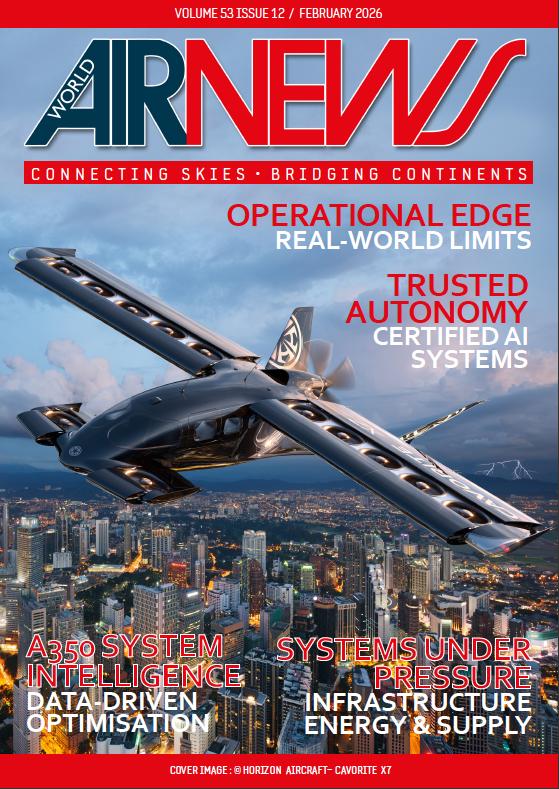
Displayed as a full-scale model at the company’s facilities in Manassas, Virginia, the EL9 features eight distributed electric rotors mounted along a fixed wing, a configuration designed to enable ultra-short take-off and landing performance.
According to Electra, this distributed electric propulsion system enables a blown-lift concept that allows operations from small clearings, unprepared strips or other constrained locations.
The EL9 is designed to carry up to nine people or a maximum payload of 3,000 pounds. For military applications, this could support resupply missions, personnel transport or special operations in areas where runway access is limited. Electra Chief Executive Officer Marc Allen said the aircraft is intended to enable point-to-point aviation, including for defence users seeking runway-independent operations.
Electra officials said the aircraft’s performance characteristics align with emerging military concepts such as the US Air Force’s Agile Combat Employment approach, which focuses on dispersing operations to reduce vulnerability at fixed bases. The company previously worked with the Air Force under an $85 million strategic funding increase, testing its earlier Goldfinch technology demonstrator, and has also received Army funding to advance research into hybrid-electric powertrains.
The EL9 is expected to cruise at a maximum speed of 175 knots and operate at altitudes between 8,000 and 12,000 feet. The aircraft is designed to generate up to 600 kilowatts of power, enabling it to function as a mobile power source, and features fly-by-wire controls that could support future autonomous operations. Power for the electric rotors is provided by batteries continuously charged by an onboard gas generator, which can also serve as a redundant power source.
While the aircraft remains in development, company officials said a prototype is planned to fly in late 2027 or early 2028, with certification targeted for 2029. Electra has submitted its application to the Federal Aviation Administration for Part 23 type certification, which would open the commercial market to the EL9.
Electra reported a backlog of options covering 2,200 aircraft and is evaluating potential manufacturing sites. The company aims to ramp up production over time, with entry into service expected around the end of the decade.
SOURCE AND IMAGE: ELECTRA AERO