
Emirates SkyCargo has closed the year with a clearly defined roadmap into 2026, following a period of significant investment across its fleet, network, partnerships, digital platforms and product portfolio. As the cargo arm of the world’s largest international airline, the division is positioning itself to connect global markets with speed, reliability and efficiency.
Reflecting on the past year, Badr Abbas, Divisional Senior Vice President of Emirates SkyCargo, noted that 2025 focused on strengthening the foundations for future growth. Network expansion, operational innovation and new product development have reinforced the airline’s ability to meet evolving customer requirements. Looking ahead, 2026 is expected to be pivotal, with the planned delivery of up to 10 Boeing 777 freighters by December, supporting the next phase of expansion and unlocking further network and scheduling opportunities.
Stronger Fleet, Wider Network
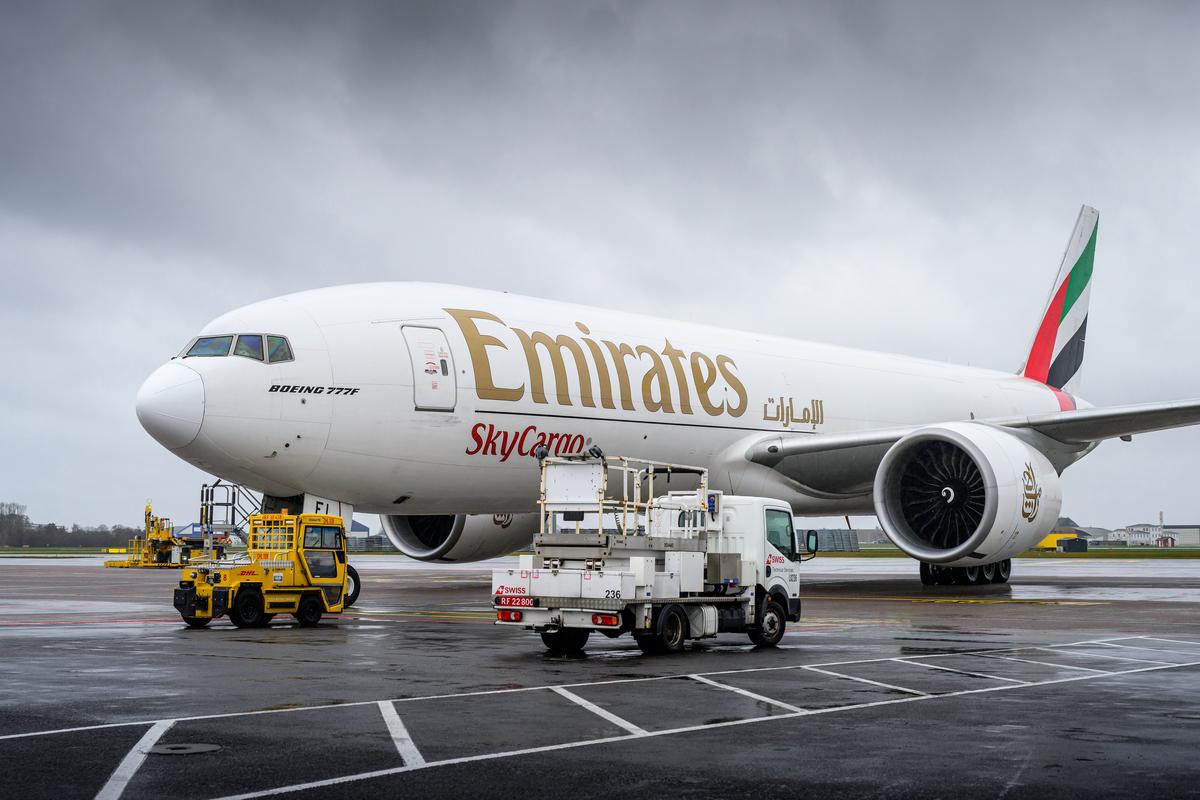
At the start of the year, Emirates SkyCargo took delivery of its first Boeing 777 freighters, followed by two additional aircraft in subsequent months. These deliveries enabled the retirement of older aircraft, supporting the airline’s commitment to operating one of the youngest fleets in service. The current fleet comprises 11 Boeing 777Fs and five wet-leased Boeing 747s. In parallel, the first Emirates passenger aircraft entered a conversion programme, with freighter operations planned to commence in 2026. By the end of next year, Emirates SkyCargo aims to operate at least 21 freighters.
In support of its long-term network strategy, the airline launched freighter services to eight new destinations during 2025: Copenhagen, Narita, Bangkok, Mumbai, Beirut, Conakry, Phnom Penh (KTI) and Hanoi. High-volume markets including Guangzhou, Shanghai and Johannesburg were also strengthened with additional weekly frequencies. Hanoi was quickly expanded to four weekly services to meet demand. By year-end, Emirates SkyCargo’s freighter network covered 42 destinations across six continents.
The airline also expanded its interline network, now exceeding 180 global partners. New agreements were signed with Africa-based Astral Aviation and Southeast Asia’s Teleport, enhancing connectivity into primary, secondary and tertiary airports in key growth regions. Existing partnerships with airlines such as Air Canada, United and Virgin Atlantic were further reinforced.
Future-Fit Operations
While planning continues for a new facility at Al Maktoum International Airport, Emirates SkyCargo invested in its current infrastructure to maintain peak operational performance. The airline upgraded its on-road fleet with the delivery of 40 Euro 6 trucks from MAN Trucks, introducing low-emissions and driver-focused technology. By the first quarter of 2026, five hydrogen-powered trucks are scheduled to join the fleet, marking a milestone in the transition towards alternative fuel vehicles.
Exploration of next-generation cargo delivery solutions also progressed, with Emirates SkyCargo and LODD Autonomous collaborating on the development and feasibility of VTOL aircraft for first- and last-mile delivery throughout 2026.
Digital transformation remained a central focus. By December 2025, almost 80% of all Emirates SkyCargo shipments were booked digitally, driven primarily by eSkyCargo, third-party digital marketplaces and direct API integrations. The airline also became the first carrier in the region to adopt PayCargo’s instant payment solution, replacing traditional cash transactions. Further enhancements to digital tools and customer-facing products are planned for 2026.
Expanding the Product Portfolio
Throughout the year, Emirates SkyCargo supported a wide range of complex and specialist shipments, from transporting more than 14,600 family pets to moving the first prototype of a Koenigsegg supercar to the UAE.
A major milestone was the launch of Emirates Courier Express, a door-to-door delivery solution that has already expanded into Australia and Germany. To date, more than 50,000 packages have been delivered, with an average network delivery time of three days and one day between the UK and UAE. Further expansion into major global economies is planned for 2026.
The airline also introduced its Aerospace and Engineering vertical, including enhanced AOG services and a dedicated Aircraft Engines offering. Demand has grown strongly, with a 100% increase in individual engine movements year-on-year. The transport of Arab Satellite 813 from Al Ain to Shanghai highlighted the precision and reliability of the new service.
Fresh, the airline’s largest vertical by tonnage, recorded 10% growth, uplifting an additional 25,700 tonnes compared with 2024. Vital, the dedicated pharmaceutical and life sciences service, saw volumes increase by 54%, with Emirates SkyCargo now moving around 2,000 tonnes of pharmaceutical products every week. Secure solutions also grew by 30%, driven by increased production of electronic devices in Vietnam and India.
Building on this momentum, Emirates SkyCargo plans to double its current capacity, add 20 new freighter destinations and continue shaping the future of global logistics through digital-first products and services in 2026.
SOURCE AND IMAGE: EMIRATES SKY CARGO