
Lockheed Martin’s F-35C Lightning II has completed its first shipboard compatibility testing aboard the Gerald R. Ford-Class carrier PCU John F. Kennedy, clearing the fighter for operations across the Navy’s entire carrier fleet.
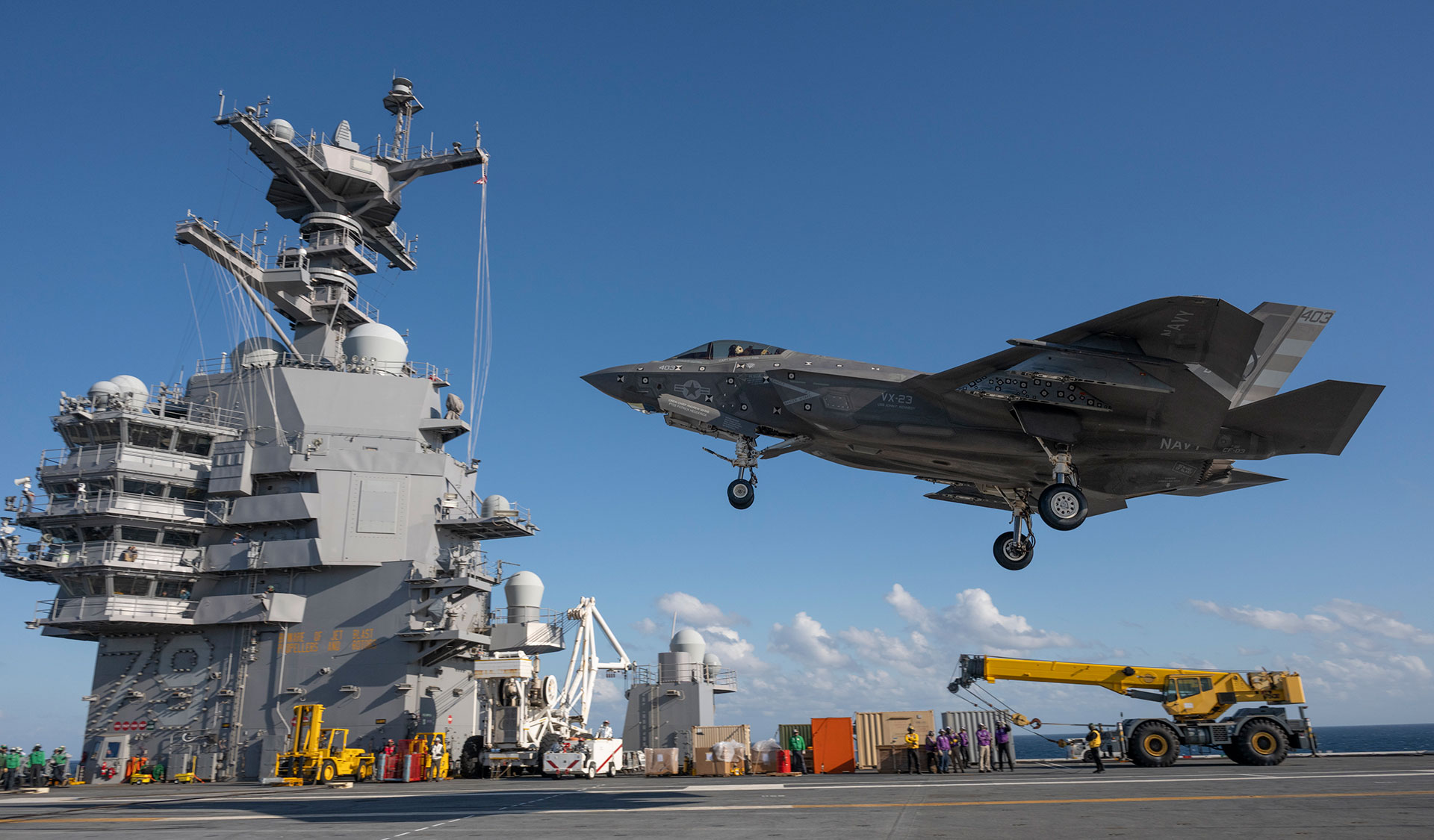
On the U.S. Navy’s birthday this year, 13 October, Lockheed Martin’s F-35C Lightning II marked a new chapter in naval aviation, completing its first recovery aboard the Gerald R. Ford-Class aircraft carrier PCU John F. Kennedy (CVN 79). The milestone connected the Navy’s 251-year legacy of innovation with the next generation of naval airpower.
Testing aboard the Kennedy marked the F-35C’s first shipboard compatibility testing on the Navy’s newest aircraft carrier, demonstrating its ability to safely launch and recover from the new flight deck while generating critical data to support future carrier operations. Over 11 days of testing, two F-35Cs from Naval Air Station Patuxent River, Maryland, completed 34 flights, 122 catapult launches and 122 arrested landings using the Electromagnetic Aircraft Launch System and Advanced Arresting Gear, both of which are the latest technological advancements for carrier-based fixed-wing operations.
“This is a critical event for the F-35C, Kennedy, and the United States Navy,” said Sean Jackson, vice president, Lockheed Martin’s F-35 Development Program. “For the first time, the aircraft has demonstrated launch and recovery operations from a Gerald R. Ford-Class flight deck, advancing the integration of fifth-generation fighter capability with the world’s most advanced carrier technology. With the completion of this test phase, the Navy has now cleared the F-35C for operations across its entire fleet of aircraft carriers.”
A NEW CARRIER ENVIRONMENT
Ford-class carriers introduce a fundamentally different operating environment, including the Electromagnetic Aircraft Launch System for smoother, more precisely controlled aircraft launches, the Advanced Arresting Gear designed to support a broader range of aircraft recovery conditions, and a redesigned flight deck and island that changes airflow, exhaust dynamics and deck operations.
TESTING DELIVERS CRITICAL DATA
The effort followed shore-based trials conducted between January 2024 and May 2025. At sea, the integrated test team collected essential data to support verification of the launch and arresting systems’ software and shipboard installations, validation of the F-35C’s loads and structural models for launch and recovery, development of Aircraft Launch and Recovery Bulletins for Ford-class carriers, confirmation of mission-systems software stability, including initial Block 4 software usage in a carrier environment, and assessment of aircraft supportability in the new carrier’s environment.
ADVANCING FIFTH-GENERATION CARRIER CAPABILITY
This milestone confirms the F-35C’s compatibility with, and capability to operate from, America’s next generation of carrier decks. Its stealth, advanced sensors and data-sharing capabilities provide a foundation for future maritime and joint-force operations, and move the programme closer to full operational integration aboard the fleet’s newest carriers.
Source and Images: Lockheed Martin