
As the United States approaches its 250th anniversary, GE Aerospace is highlighting the technological developments that have shaped both the nation’s industrial history and the evolution of aviation, from early flight innovations to modern aerospace propulsion systems.
CELEBRATING A LEGACY OF INNOVATION
GE Aerospace has announced a series of initiatives to mark the United States’ 250th anniversary, highlighting the role of innovation and engineering in the country’s development and recognising the contributions of the company and its predecessors to aerospace, energy and technology.
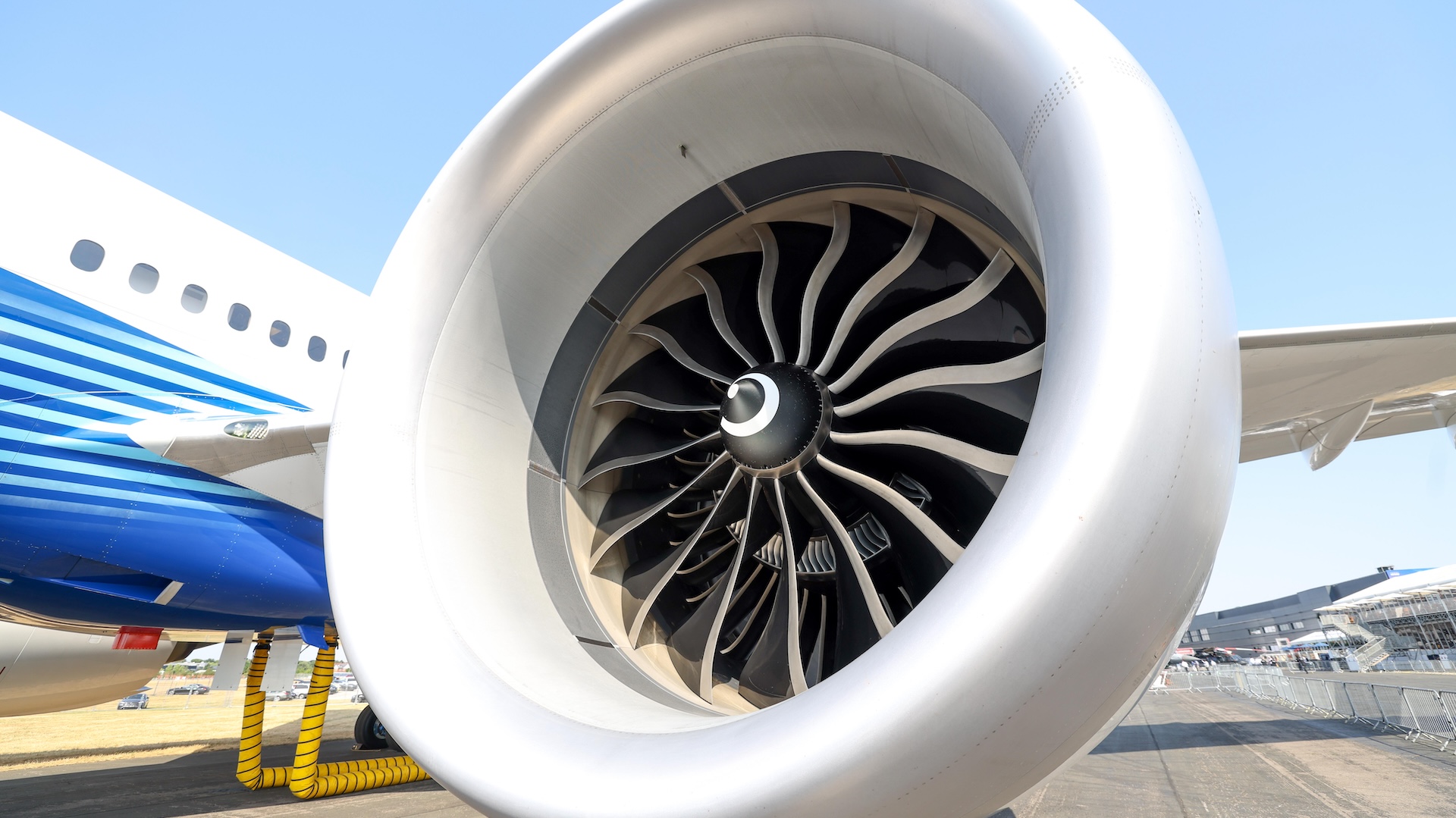
The company is supporting educational and community programmes linked to the America 250 celebrations, including exhibitions on the National Mall in Washington, D.C., where visitors will be able to view the GE9X, currently the world’s largest commercial aircraft engine, alongside an interactive aviation display.
Additional initiatives include partnerships with state-level America 250 programmes in Ohio and Massachusetts, as well as participation in the America Gives national volunteer campaign.
AVIATION MILESTONES THROUGH THE DECADES
Among the aviation achievements highlighted by GE Aerospace is the development of the turbosupercharger by GE scientist Sanford Moss in 1918. Created at the request of the U.S. Army, the technology enabled aircraft engines to maintain performance at higher altitudes by compressing incoming air, laying the foundation for high-altitude military and commercial flight.
Another milestone came in 1942 with the successful operation of the GE I-A, recognised as America’s first jet engine. Developed at GE’s facility in Lynn, Massachusetts, the engine powered the Bell XP-59A Airacomet, the first American military jet aircraft, helping usher in the jet age in the United States.
ADVANCES IN MILITARY PROPULSION
The company also highlighted the introduction of the T700 turboshaft engine in 1978. Developed for the U.S. Army’s next-generation helicopter requirements, the engine was designed to operate in demanding environments while simplifying maintenance through a modular architecture. Since entering service, the T700 has accumulated more than 100 million flight hours and continues to power military helicopter fleets, including the Sikorsky Black Hawk.
In the fixed-wing military sector, GE Aerospace pointed to the F110 afterburning turbofan engine, selected in the 1980s to power fighter aircraft including the F-14, F-15 and F-16. More than four decades later, the engine remains in production and continues to equip several advanced combat aircraft platforms.
COMMERCIAL AVIATION TECHNOLOGY
GE Aerospace also highlighted the impact of the GE90 engine, which entered service in 1995 on the Boeing 777. The engine introduced carbon-fibre composite fan blades to commercial aviation, reducing weight while improving fuel efficiency and operational performance.
The evolution of that technology can be seen in the GE9X, selected in 2013 as the exclusive powerplant for Boeing’s 777X programme. Certified in 2020, the engine incorporates ceramic matrix composites and additive manufacturing technologies, delivering up to 134,300 pounds of thrust while improving fuel efficiency and reducing emissions. The GE9X is expected to enter commercial service in 2027.
FROM AVIATION TO SPACE
Beyond aviation, GE Aerospace highlighted the role of its subsidiary Unison in supporting NASA’s Artemis programme. Ignition systems designed and produced by Unison were used during the Artemis II lunar mission launched in April 2026, the first crewed lunar flyby mission in more than five decades. The company said its systems are also expected to support the Artemis III mission planned for 2027.
As part of the America 250 celebrations, GE Aerospace says the initiative aims to recognise how generations of engineering developments have contributed to advances in transportation, defence, space exploration and industrial technology.
SOURCE AND IMAGE CREDIT: GE Aerospace