

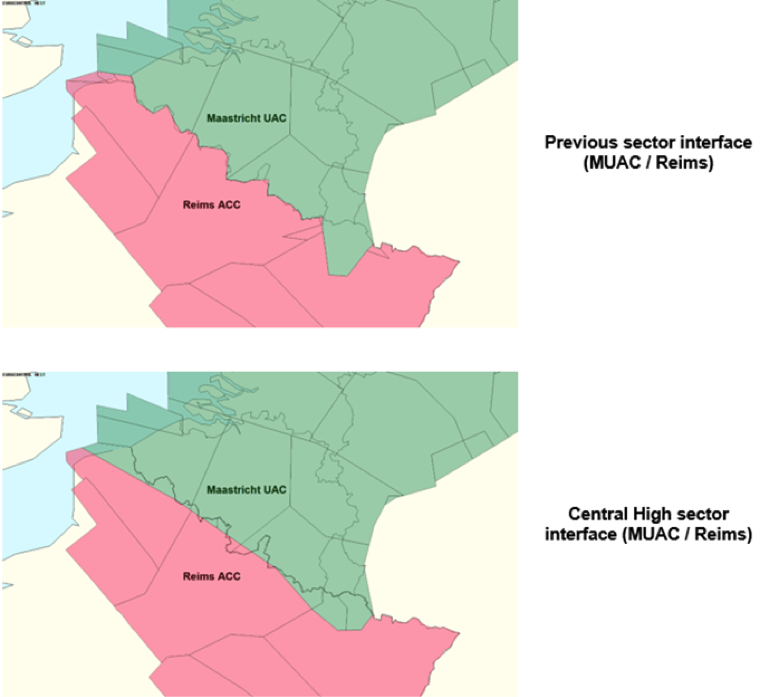
This milestone update shifts the Air Traffic Control (ATC) sector interface between the two centres to align with traffic flow rather than adhering strictly to national borders. The result? Increased ATC capacity, reduced complexity, and a lighter workload for air traffic controllers.
Beyond operational efficiencies, the redesign offers tangible environmental benefits. Airlines can now chart shorter, more direct routes, translating into reduced fuel consumption and lower carbon emissions.
“As the only cross-border, civil-military air navigation service provider in Europe, we are an example of the efficiencies that can be gained when airspace boundaries align with traffic flows rather than national borders,” remarked Peggy Devestel, Director of EUROCONTROL MUAC. “This project serves as an example of bilateral collaboration for the benefit of the overall network.”
Estelle Le Guilcher, Head of Reims ACC (DSNA), highlighted the extensive planning behind the redesign. “This upper airspace design is the result of several years of work. By optimising our interface with MUAC, Reims ACC will be able to improve the operational and environmental performance of flights for the benefit of the whole European network. A new stage in our commitment to modernisation which reinforces the key role of Reims ACC!”
This initiative forms part of the Central High Project, a FABEC program led by MUAC to enhance sector interfaces across neighboring air traffic control centres. The collaboration, which included France’s DSNA and other aviation partners, underscores the potential for innovation when international organisations unite toward a common goal.
Devestel added, “The delivery of this project was only possible due to the close and productive collaboration with the DSNA, the French Air Navigation Service Provider. I would like to thank them as well as skeyes, the Civil Aviation Authorities, and all other partners involved for their contribution.”
Looking ahead, further developments are anticipated to enhance traffic flow and capacity, ensuring continued advancements in air navigation services across MUAC and its surrounding regions.