
Northrop Grumman’s Pegasus rocket has been selected for a rapid-response mission to help extend the operational life of NASA’s Neil Gehrels Swift Observatory.
RAPID-RESPONSE SPACE MISSION
Supporting the Swift Observatory
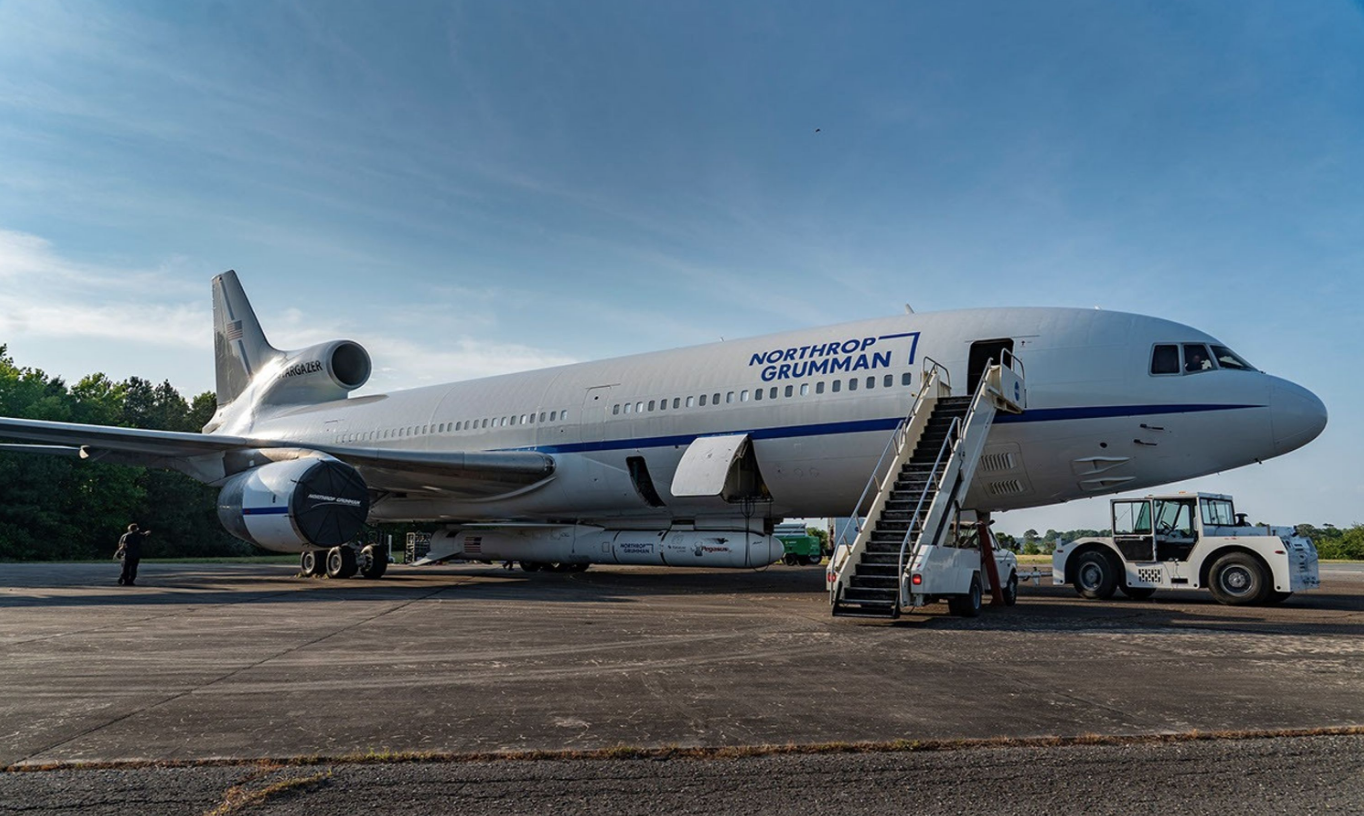
Northrop Grumman’s Pegasus rocket is scheduled to support a time-critical mission to prevent NASA’s Neil Gehrels Swift Observatory from re-entering Earth’s atmosphere. The mission will see Katalyst Space’s LINK spacecraft launched aboard Pegasus to rendezvous with Swift and boost it into a higher orbit, extending the observatory’s operational life.
According to Northrop Grumman, Pegasus was selected because its air-launched design could meet the mission’s orbit, schedule and budget requirements. Released from an L-1011 carrier aircraft, the launch system provides flexibility by operating from multiple locations, including Kwajalein Atoll for this mission.
THREE DECADES OF PEGASUS
Engineering heritage
Pegasus has completed more than 45 launches since 1990 and has been used to deploy scientific and exploration satellites. The company said the latest mission includes a complete avionics upgrade while retaining the launch system’s established architecture.
Swift, built by Northrop Grumman and launched in 2004 to study gamma-ray bursts, has exceeded its original two-year design life and has detected more than 1,700 gamma-ray bursts. Northrop Grumman said the mission demonstrates the long-term value of robust engineering and ongoing operational support.
SOURCE AND IMAGE: NORTHROP GRUMMAN