
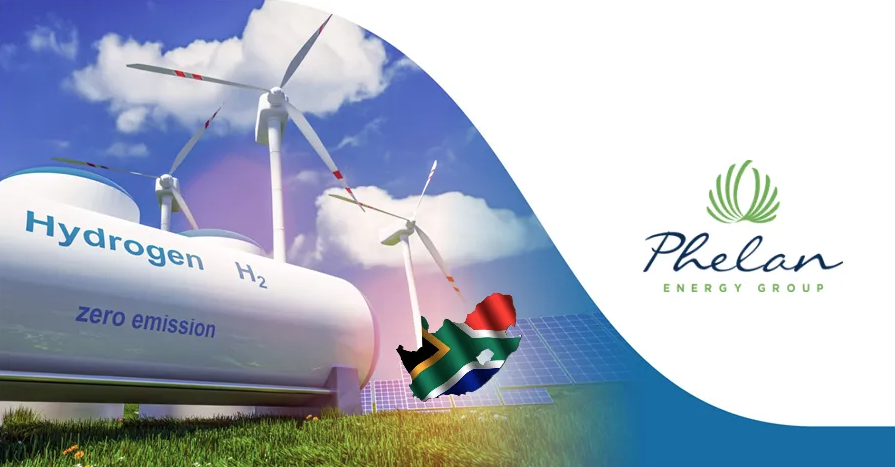
Phelan Green, through its subsidiary Phelan eFuels, has selected Honeywell’s renewable fuel process technology for a planned electro-sustainable aviation fuel (eSAF) facility in Saldanha Bay, Western Cape.
The announcement, made on 1 April 2026, marks a further step in the development of South Africa’s emerging sustainable aviation fuel sector and its positioning within global low-carbon fuel supply chains.
TECHNOLOGY SELECTION FOR eSAF PRODUCTION
The facility will deploy Honeywell UOP’s Fischer Tropsch (FT) Unicracking™ process technology. This process converts FT liquids and waxes—produced from captured carbon dioxide—into aviation fuel that meets industry specifications.
The selection reflects a move towards commercially viable pathways for producing sustainable aviation fuel at scale, with a focus on compliance with international aviation standards.
PART OF BROADER GREEN HYDROGEN PROGRAMME
The eSAF facility forms part of the wider Phelan Green Hydrogen Project, a R47 billion (approximately US$2.5 billion) private investment initiative.
The project has been recognised by the South African government as a nationally strategic green industrial development, highlighting its potential contribution to both energy transition objectives and industrial growth.
EXPORT-FOCUSED PRODUCTION CAPACITY
Once operational, the Saldanha Bay facility is expected to produce more than 140,000 tonnes of eSAF annually, with supply targeted primarily at European Union and United Kingdom markets.
This export-oriented model reflects increasing international demand for sustainable aviation fuels, particularly in regions implementing regulatory frameworks to reduce aviation emissions.
CONSTRUCTION TIMELINE AND ECONOMIC IMPACT
Construction of the facility is scheduled to commence in the fourth quarter of 2026.
The project is expected to support significant employment across multiple phases, contributing to local job creation and broader economic activity in the region.
In addition to its industrial impact, the development positions South Africa as a potential hub for next-generation aviation fuels, aligned with global decarbonisation trends in the aviation sector.
INDUSTRY CONTEXT
The use of Fischer Tropsch-based processes for eSAF production reflects a growing focus on synthetic fuels derived from captured carbon and renewable energy inputs.
As airlines and regulators move towards stricter emissions targets, scalable production technologies and reliable supply chains are becoming central to the adoption of sustainable aviation fuels.
Projects such as the Saldanha Bay facility indicate increasing alignment between energy, industrial policy and aviation requirements.
SOURCE AND IMAGE: Phelan Green / Honeywell