
In a groundbreaking initiative to change medical evacuation (MEDEVAC) capabilities, paratroopers from the 82nd Airborne Division have played a pivotal role in refining the design of the Future MEDEVAC Cabin, a critical component of the Future Long Range Assault Aircraft (FLRAA).
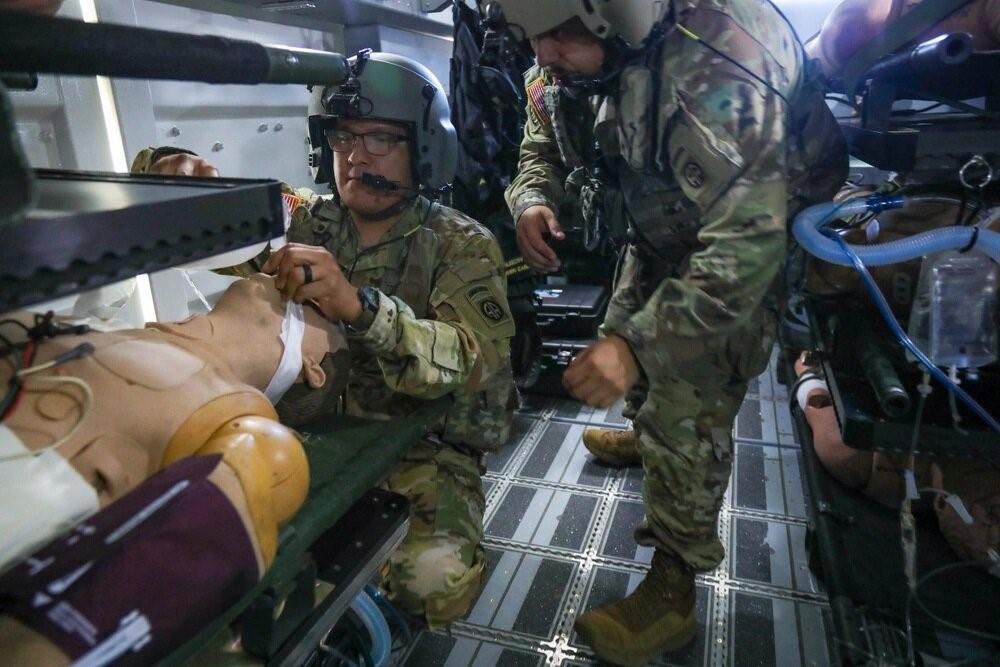
Between November 12 and November 22, Critical Care Flight Paramedics (CCFP) of the 3-82 General Support Aviation Battalion (GSAB) and Combat Medics from the 1st Brigade Combat Team participated in a Special User Evaluation (SUE) of the Future MEDEVAC Cabin Technical Demonstrator (FMC-TD). Their mission: to provide expert feedback during hands-on, scenario-based assessments, ensuring that future MEDEVAC aircraft meet the real-world demands of operational medicine.
Advancing MEDEVAC Capabilities for Modern Combat
With the evolving nature of Large Scale Combat Operations (LSCO), the U.S. Army Medical Command (MEDCOM) has prioritized advancements in operational medicine to clear battlefields, return soldiers to combat, and maintain effectiveness in contested environments. Earlier this year, these goals were spotlighted at the Association of the United States Army (AUSA) exposition, where MEDCOM announced its commitment to integrating innovative medical capabilities into the FLRAA program.
“The Future MEDEVAC Cabin is designed with input from medics, pilots, and engineers, bridging gaps that historically hindered aircraft design,” said MAJ Nicholas Toney, Assistant MEDEVAC Product Manager with PEO-Aviation. “Fort Liberty is the first stop in a comprehensive evaluation process that will shape the cabin’s final configuration.”
Designing with Medics in Mind
The Future MEDEVAC Cabin Technical Demonstrator (FMC-TD) offers a glimpse into the future of medical evacuation. Built to mimic a medical aircraft cabin, this 20-foot steel-reinforced container incorporates a versatile Patient Handling System (PHS) capable of accommodating up to six patients.
Brig. Gen. Cain Baker, Director of the Cross Functional Team for Future Vertical Lift, emphasized the importance of integrating feedback from end users. “This evaluation is the most critical step in the design process,” he said.
The medics’ input has already proven invaluable. Staff Sgt. Jesus Taizan, a Critical Care Flight Paramedic with the 3-82 GSAB, highlighted the benefits of modular litter panels and pivoting drawer systems. These features, he noted, enable medics to provide superior care, even in the most challenging LSCO environments.
Maj. Jillian Champagne, Commander of Charlie “DUSTOFF” Company, underscored the necessity of this initiative, recalling how her team had to modify outdated medical cabins during a recent U.S. Central Command deployment. “Medics’ expertise ensures that engineers address critical considerations, delivering functional and adaptable designs,” she stated.
A Holistic Approach to Modernisation
This initiative represents a collaborative effort between Army Medicine, the U.S. Army Medical Research and Development Command, and the Telemedicine & Advanced Technology Research Center, with contributions from Naval Air Systems Command (NAVAIR).
“Our goal is to ensure that medical capabilities are seamlessly integrated into aviation development, providing a comprehensive solution for MEDEVAC operations,” said Maj. Gen. Anthony McQueen, Deputy Surgeon General of the U.S. Army.
As the FMC-TD continues its tour of six major military installations, the feedback gathered will culminate in a comprehensive report to inform the FLRAA’s final design. This aligns with the Army’s broader modernisation goals for 2030, ensuring that both Army Aviation and Army Medicine evolve to meet future challenges.
Toward the Army of 2030
The Future MEDEVAC Cabin initiative reflects a commitment to enhancing care for soldiers and their families, both at home and abroad. With its ability to travel twice as far and twice as fast as current systems, the FLRAA is poised to redefine the capabilities of operational medicine, paving the way for a stronger, more resilient Army.
ORIGINAL ARTICLE BY: CPT Shervon Pope 82nd Combat Aviation Brigade IMAGE: Photos by SGT Lilliana Magoon and SGT Eli Baker