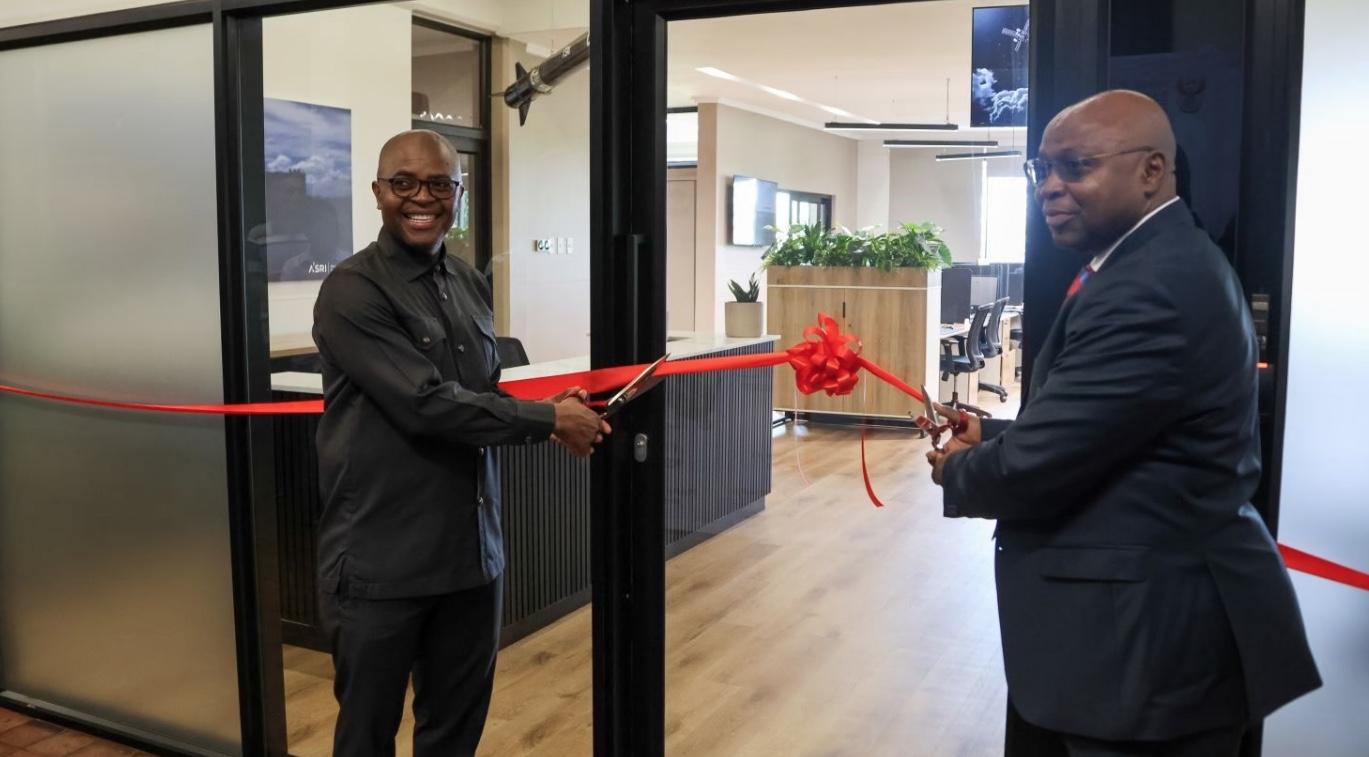
South Africa’s aerospace engineering and space technology ecosystem took a substantive step in November 2025 with the official opening of the Advanced Manufacturing Facility and the new headquarters of the Aerospace Systems Research Institute (ASRI) at the University of KwaZulu‑Natal (UKZN) on the Howard College Campus in Durban. The facilities were inaugurated by Dr Mlungisi Cele, Director‑General of the Department of Science, Technology and Innovation (DSTI), signalling a strengthened nexus between research, advanced manufacturing and national aerospace capability.
Government and Institutional Alignment
In his keynote address, Dr Cele reiterated the strategic importance of coordinated partnerships between government, academia and industry to support national priorities in science, technology and innovation. He emphasised that enhanced infrastructure such as ASRI’s new Advanced Manufacturing Facility plays a central role in linking research excellence to industrial application and global competitiveness.
The Deputy Vice‑Chancellor and Head of the College of Agriculture, Engineering and Science at UKZN, Professor Fhatuwani Mudau, welcomed DSTI’s investment and noted the national recognition ASRI has garnered for its aerospace engineering work. He underlined the university’s commitment to advancing science and capacity building across the country.
ASRI’s Mandate and Research Focus
ASRI, which evolved from the Aerospace Systems Research Group established in 2009 and was formally designated an institute within UKZN’s School of Engineering in 2022, conducts applied research in rocket propulsion and related aerospace technologies. Its core mission encompasses becoming a global centre of excellence in aerospace propulsion research, supporting South Africa’s space engineering economy, and cultivating highly skilled human capital in propulsion engineering.
The Advanced Manufacturing Facility enhances ASRI’s capability to produce advanced aerospace components in‑house, reducing dependency on external suppliers and strengthening localisation of key manufacturing processes. The facility is expected to attract research funding and partnerships while fostering professional development among staff and students.
The new ASRI office space features a boardroom with teleconferencing systems, collaborative meeting rooms and an advanced computing suite for simulation and analysis. These amenities are designed to improve productivity and the professional environment within the institute.
Human Capital and Talent Development
ASRI plays a pivotal role in South Africa’s talent pipeline for aerospace engineering. Recent reports highlight the graduation of a new cohort of Master of Science in Mechanical Engineering students who have contributed directly to ASRI’s propulsion research and development projects — underscoring the institute’s role in nurturing the next generation of rocket scientists and engineers.
In March 2025, ASRI secured a R2.4 million grant from the Council for Scientific and Industrial Research (CSIR) to advance research in metal 3D‑printed rocket propulsion components — particularly combustion chambers for the SAFFIRE rocket engine programme — with collaborative support from industry partners.
ASRI also operates South Africa’s only suborbital rocket launch gantry at the Denel Overberg Test Range, enhancing the country’s capability to conduct sounding rocket missions and offering a hands‑on training platform for student and postgraduate engineers.
Aerospace Innovation and Future Goals
Looking ahead, ASRI and UKZN are planning further expansion to include dedicated propulsion test facilities and additional infrastructure to support static firing tests, production capability, lecture theatres and an outreach centre focused on aerospace education. Reports indicate aspirations to support activities that may eventually culminate in suborbital rocket missions and, over the longer term, contribute to orbital launch capability.
The launch of ASRI’s new headquarters and Advanced Manufacturing Facility represents a tangible milestone in South Africa’s ongoing effort to build a sovereign and competitive aerospace sector, fostering innovation that spans research, engineering and industrial capability.
SOURCE AND IMAGE: Department of Science, Technology and Innovation’s website on November 13, 2025.