
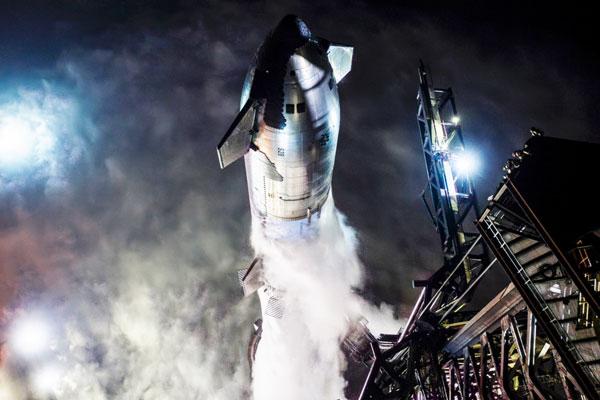
BOCA CHICA, TEXAS – SpaceX is preparing for the next major test of its Starship programme, with Flight 9 tentatively scheduled to launch no earlier than Tuesday, May 27 at 7:30 p.m. EDT from the company’s Starbase facility in South Texas. FAA-issued temporary flight restrictions point to a targeted launch window, although the company has not yet officially confirmed the date.
The mission represents the ninth integrated flight test of the Starship system and includes a significant milestone: the first re-use of a Super Heavy booster. The booster previously flew during January’s Flight 7 and returns with only four of its 33 Raptor engines replaced. The launch window may shift based on technical readiness or weather conditions, with backup opportunities on 28 and 29 May, as indicated by authorised road closures.
Flight 9 follows mixed results from Flights 7 and 8 earlier this year. While the Super Heavy booster was successfully recovered via the company’s launch tower arms, the upper-stage vehicle failed to complete its intended objectives. This next test aims to expand operational capability through key reusability demonstrations, including in-space manoeuvres, engine reignitions, and a controlled splashdown.
Standing at 122 metres, the Starship launch system is the tallest and most powerful rocket ever built. The platform is designed to be fully reusable and is central to SpaceX’s ambitions for missions to low Earth orbit, the Moon, and Mars.
The Flight 9 mission is expected to last just over one hour and includes several technical tests. The upper-stage vehicle will attempt in-space engine restarts, release eight Starlink simulator payloads on a suborbital trajectory, and eventually disintegrate on reentry. These simulations replicate the form factor of SpaceX’s future next-generation satellites.
Unlike previous missions, the Super Heavy booster will not return to the launch site. Instead, it will execute a soft splashdown in the Gulf of Mexico, testing offshore recovery capabilities.
One of the notable changes for Flight 9 is the expansion of the Aircraft Hazard Area (AHA). An updated safety and environmental assessment found an increased likelihood of failure compared to earlier flights. The new AHA extends approximately 1,600 nautical miles eastward, encompassing areas such as the Bahamas and Turks and Caicos Islands—nearly doubling the range covered during Flight 8.
“With this return-to-flight determination, Flight 9 has been cleared for launch,” the Federal Aviation Administration (FAA) confirmed. “SpaceX continues to comply with stringent safety, environmental, and licensing criteria.”
Real-time mission updates will be shared on SpaceX’s official X (formerly Twitter) account, and all timelines remain subject to change.