
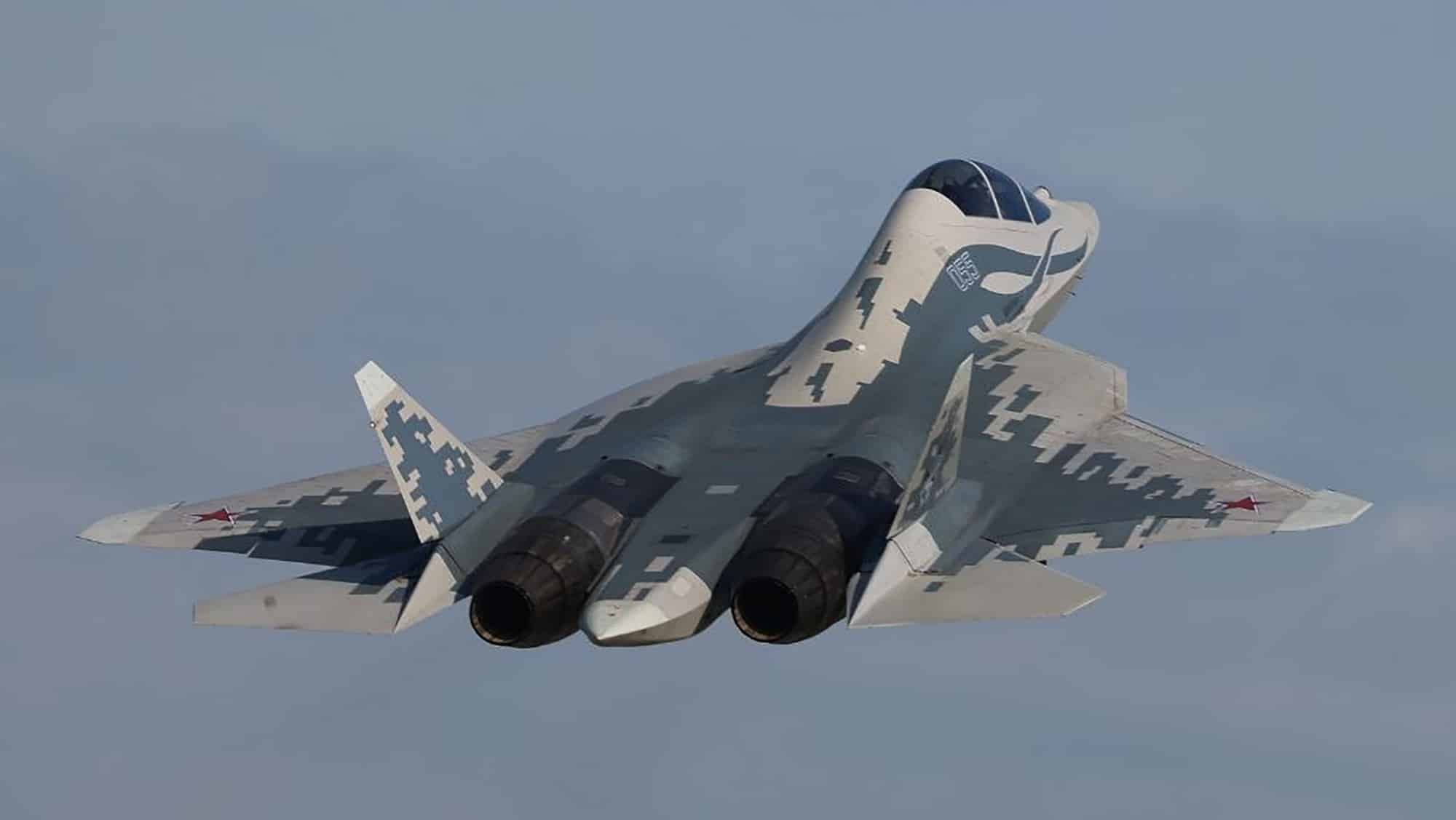
United Aircraft Corporation has begun flight testing the two-seat Su-57D fifth-generation fighter prototype, expanding the aircraft’s combat, training and command capabilities.
United Aircraft Corporation (UAC), part of the Rostec State Corporation, has commenced flight testing of the Su-57D, a new two-seat variant of the Su-57 fifth-generation multirole fighter aircraft.
The prototype completed its maiden flight under the control of Sergei Bogdan, Chief Pilot of the Sukhoi Design Bureau and Hero of Russia. According to UAC, the flight was completed successfully and met all planned mission parameters.
MULTIROLE AND TRAINING CAPABILITIES
Russian First Deputy Prime Minister Denis Manturov said the new two-seat configuration was developed proactively by the country’s aircraft industry and is intended to expand the aircraft’s operational flexibility beyond its existing combat role.
Rostec stated that the aircraft could serve both as a combat trainer and as a command-and-control platform capable of coordinating operations involving manned and unmanned aircraft systems within a shared information and control environment.
Vadim Badekha, CEO of UAC, said development work on the Su-57 platform remains ongoing, with continued efforts focused on improving functionality and broadening operational applications. He also indicated that the two-seat variant could support the aircraft’s export potential in international markets.
EXPANDED OPERATIONAL ROLE
The Su-57 is designed as a multirole frontline combat aircraft capable of engaging aerial, ground and maritime targets under all-weather and day-night conditions. According to the manufacturer, the aircraft’s low-observable characteristics are intended to enhance survivability against modern air defence systems and within contested electronic warfare environments.
The introduction of a two-seat version reflects broader trends in advanced combat aviation toward integrating crewed and uncrewed systems within networked operational architectures.
SOURCE: UNITED AIRCRAFT CORPORATION / ROSTEC