
May 9, 2025 – Upgrading your avionics today means more than just bolting in new technology — it represents a transformation in how pilots interact with their aircraft. Navigation systems have evolved far beyond guiding pilots from point A to B. The latest offerings integrate deeply into aircraft systems, improving not only efficiency but situational awareness and pilot workload.
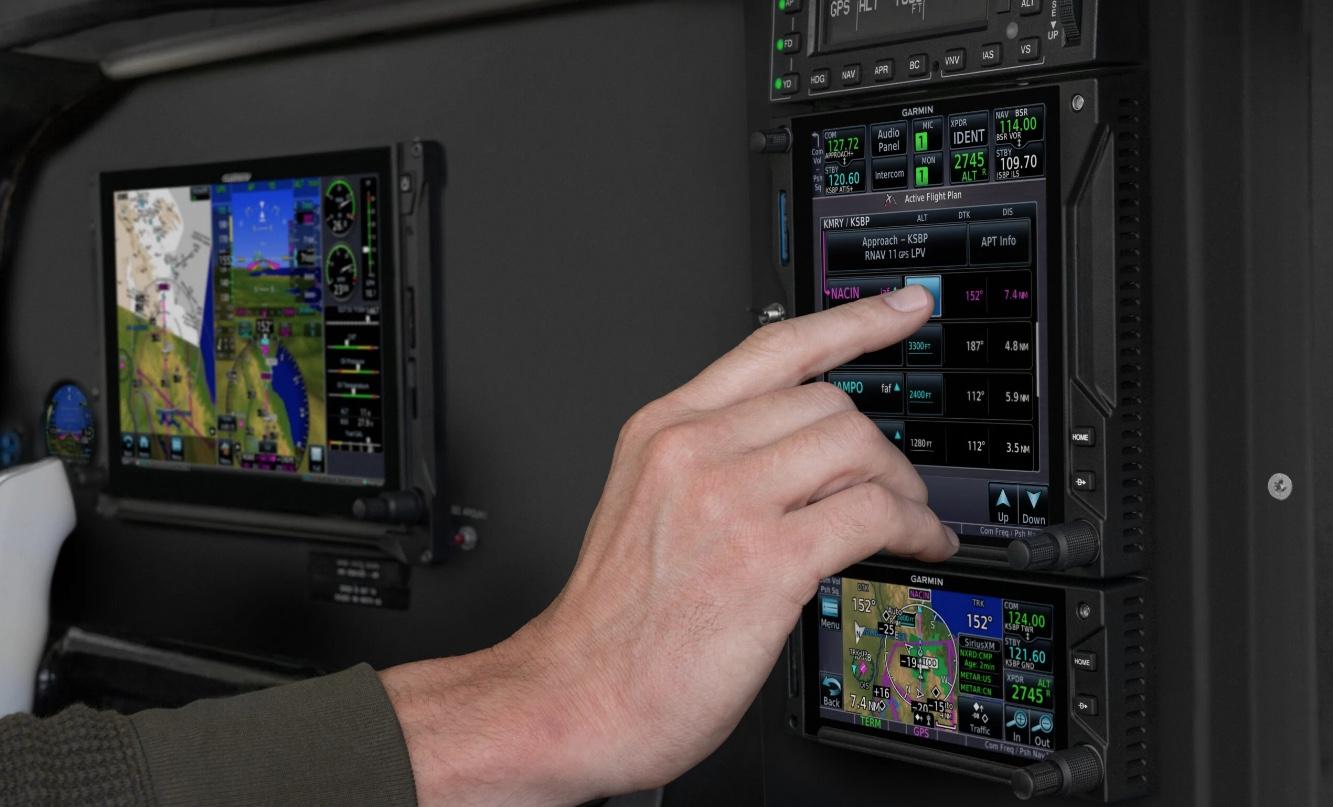
Garmin’s GTN™ Xi series has rapidly become the industry benchmark for modern GPS/NAV/COMM integration. In fact, experts liken the difference between early-generation GNS™ series and the GTN Xi to swapping a flip phone for a smartphone — faster, smarter and designed to handle today’s flying environment.
The Heart of the Cockpit
“The GTN Xi is the hub of the airplane,” says John Zimmerman, president of Sporty’s Pilot Shop and long-time Garmin avionics dealer. “It connects to everything — the PFD, MFD, autopilot, weather receiver — in ways the older GNS just couldn’t.”
The Xi series blends high-speed processing, an intuitive touchscreen, and seamless interoperability with other Garmin systems. It’s a slide-in upgrade from previous GTN 650 and 750 units, making it an efficient installation path for aircraft owners looking to modernise without overhauling the entire panel.
Which Navigator Is Right for You?
Choosing the right Garmin unit depends on your flying habits. “It goes back to who the pilot is, their mission, and what they want to get out of the aircraft,” Zimmerman explains.
Weekend flyers may find a basic GPS navigator sufficient, but for those operating under IFR or seeking enhanced cockpit awareness, the GTN Xi line is hard to beat. With higher screen resolution (187 DPI compared to the original GTN’s 134), quicker startup, streamlined menus, and more ergonomic control layout, the Xi stands out as a serious tool for serious aviators.
It’s also lighter and more power-efficient, ensuring compatibility with other Garmin avionics in a fully connected flight deck ecosystem.
650 vs. 750: Making the Choice
When deciding between the GTN Xi 650 and 750, space and budget are often key factors.
“The 650 is a phenomenal upgrade from the GNS 430,” says Zimmerman. “For the 750, we’re usually replacing the GNS 530 with an audio panel or transponder too.”
Grayson Barrows, general manager at Precision Support Services, agrees. “Pilots gravitate toward the 750 for its ability to combine multiple capabilities — remote audio panel, remote transponder — into a compact footprint.”
Whether you fly VFR on sunny weekends or log serious hours in IMC, there’s a GTN Xi option designed for your mission profile.
SOURCE AND IMAGE: GARMIN