

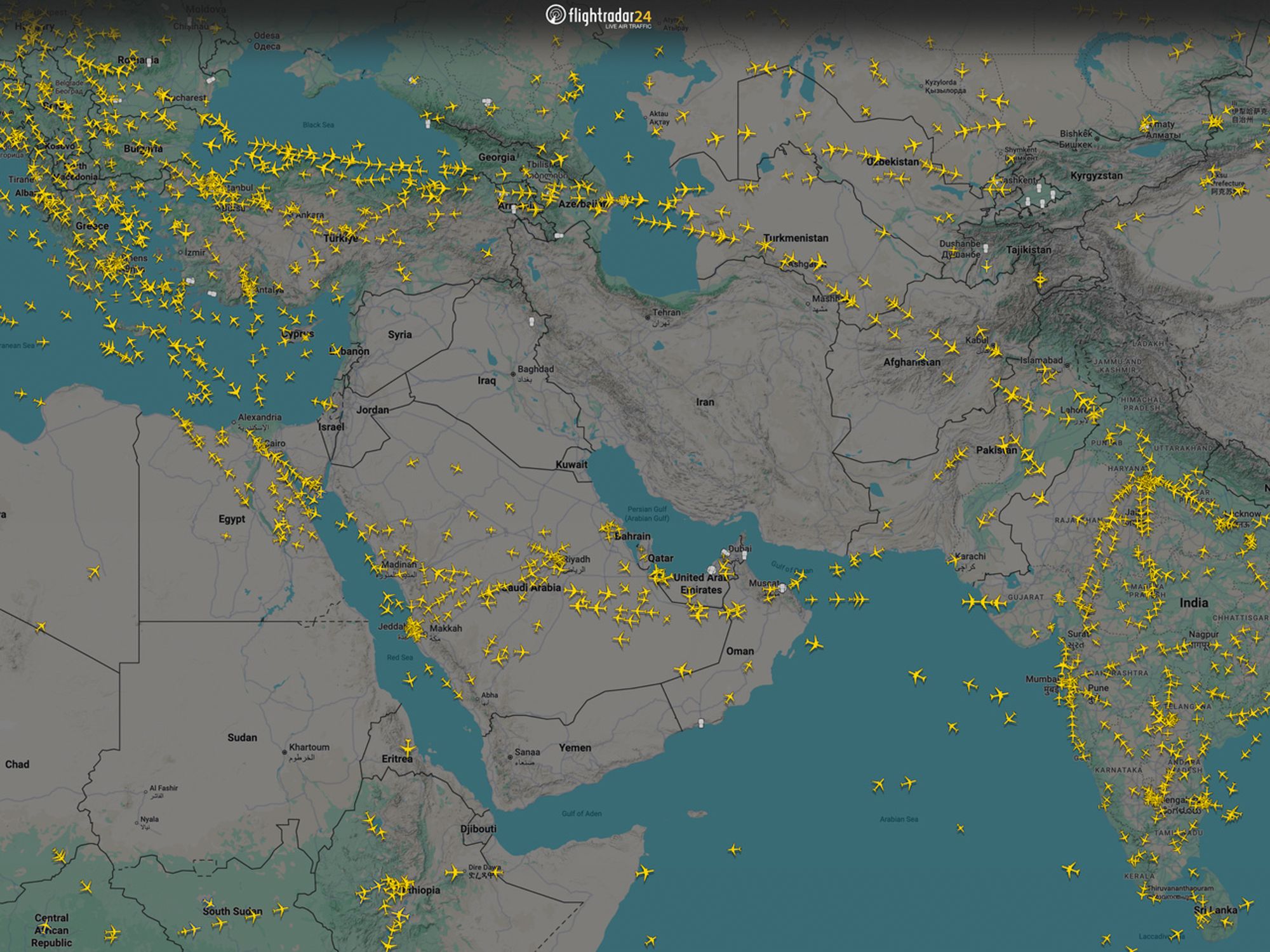
UAE airports resume limited flight operations following regional disruptions, highlighting the broader impact of Middle East airspace constraints on Europe–Asia aviation routes.
Flights have resumed on a restricted basis at Dubai, Abu Dhabi, Sharjah, Ras Al Khaimah and Fujairah, with authorities advising passengers to travel only if they have confirmed bookings.
Airlines including Etihad Airways, Emirates, flydubai and Air Arabia have begun restoring limited services while authorities continue to closely monitor operational conditions.
OPERATIONAL STATUS
Restricted schedules as airports resume services
Authorities are prioritising safety while airport operations return gradually. Flight schedules remain subject to change as airlines restore services and adjust to evolving operational conditions.
Access to airport terminals is currently restricted to passengers holding confirmed tickets and who have been notified by their airline. The measure is intended to ensure safe and orderly operations during the phased resumption of flights.
At Dubai Airports, services have resumed on a limited basis at Dubai International Airport (DXB) and Dubai World Central – Al Maktoum International Airport (DWC).
Dubai Airports Chief Executive Officer Paul Griffiths has been coordinating with Dubai Police and the General Directorate of Residency and Foreigners Affairs – Dubai to support frontline teams during the operational recovery.
PASSENGER GUIDANCE
Travellers advised to verify flight information
Passengers are advised to confirm travel details before departing for the airport.
Recommended actions include:
- Confirm departure times directly with the airline
- Verify the departure terminal
- Check airline websites or mobile applications for the latest operational updates
Authorities emphasise that passengers should travel only if holding a confirmed ticket and have been notified that their flight is operating.
AIRSPACE PRESSURE IMPACTING GLOBAL ROUTES
Disruptions highlight importance of Gulf air corridors
Beyond the immediate operational disruption to travellers, the situation highlights the strategic importance of Gulf airspace to global aviation networks.
Airspace restrictions and operational limitations in parts of the Middle East can create corridor compression between Europe and Asia, concentrating large volumes of long-haul traffic into fewer available routes.
When this occurs, airlines may face longer routings, congestion in alternative airways and operational constraints, particularly for flights linking Europe, Asia and Africa through the Gulf region.
The gradual restoration of UAE airport operations therefore plays an important role in stabilising traffic flows across one of the world’s busiest intercontinental aviation corridors.
SOURCE: GULF NEWS IMAGE: FLIGHT RADAR 24