
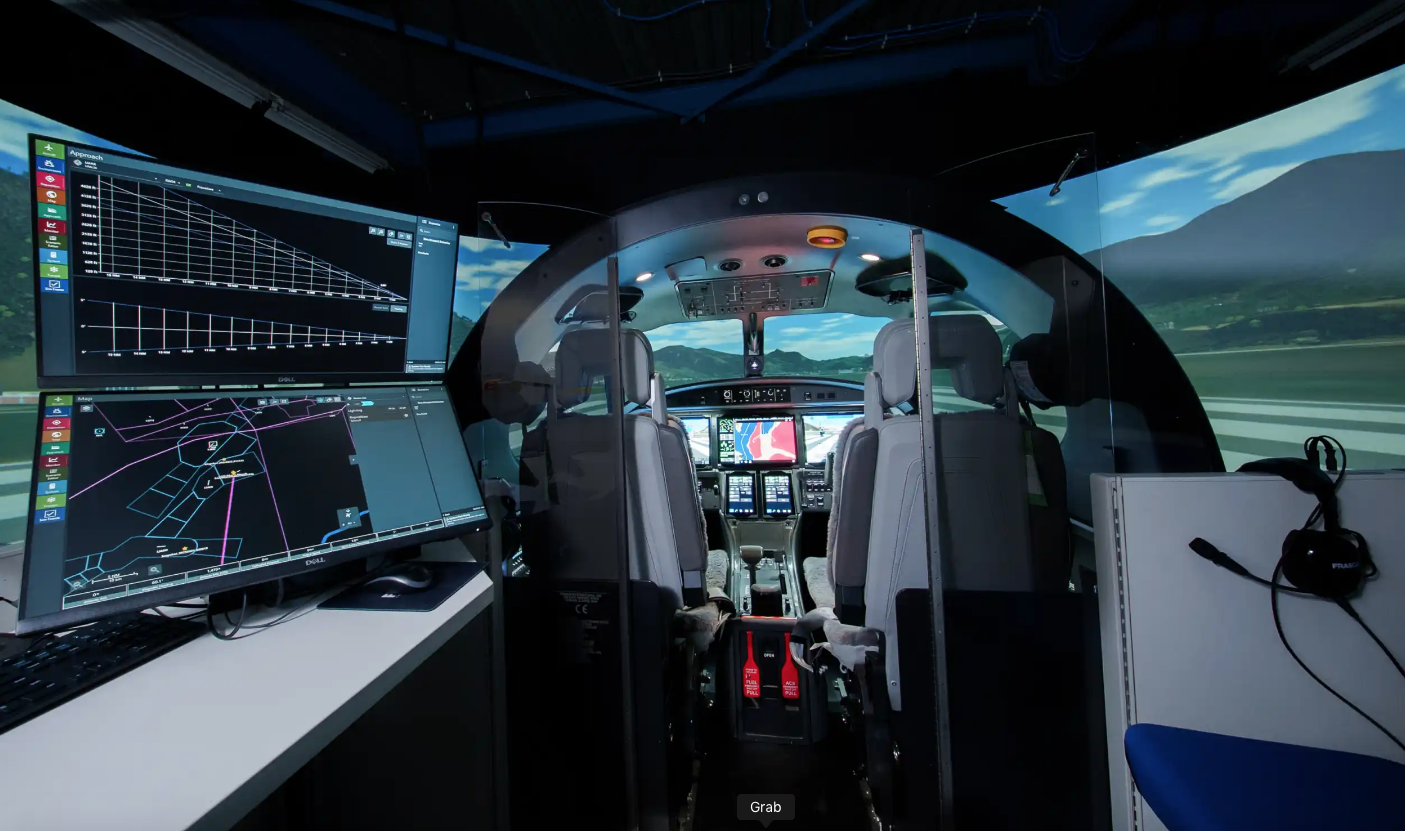
Pilatus has confirmed certification of its new PC-12 PRO flight simulator, marking a key step in the rollout of its next-generation pilot training programme centred on the aircraft’s advanced cockpit systems.
CERTIFIED TRAINING PLATFORM
The PC-12 PRO simulator has received approval from both the European Union Aviation Safety Agency (EASA) and the Federal Aviation Administration (FAA), enabling its use across a range of pilot training applications.
In Europe, the simulator is certified as a Level 2 Flight Training Device and a Level II Flight Navigation Procedures Trainer for Multi-Crew Cooperation. Under FAA standards, it holds Level 6 Flight Training Device certification.
The simulator is currently operational in Switzerland, with additional access available in the United States through SIMCOM training centres.
FOCUS ON ADVANCED COCKPIT SYSTEMS
At the core of the training platform is the Pilatus Advanced Cockpit Environment (ACE), based on the Garmin G3000 PRIME avionics suite. The simulator enables pilots to develop proficiency in operating the aircraft’s new smart cockpit in a controlled and repeatable environment.
Training scenarios include standard procedures, system familiarisation, and the simulation of abnormal operations and adverse weather conditions.
ENHANCING TRAINING EFFICIENCY AND SAFETY
The simulator is designed to support comprehensive training workflows, allowing pilots to practise complex or infrequent scenarios that would be difficult to replicate in live flight operations.
Pilatus notes that differences training from earlier PC-12 variants, including the NG and NGX models, can be completed entirely within the simulator environment. This approach reduces operational costs while maintaining training effectiveness.
Simulator-based training also contributes to reduced environmental impact compared to aircraft-based training.
FUTURE TRAINING INFRASTRUCTURE
A full-motion PC-12 PRO simulator is currently in development and is expected to enter service in 2028 at the Fly7 training centre at Lausanne Airport in Switzerland.
This expansion reflects a broader trend toward integrated training ecosystems combining simulator-based instruction with digital learning platforms.
AIRCRAFT PROGRAMME CONTEXT
The PC-12 PRO introduces a redesigned cockpit and enhanced safety features, including automated emergency landing functionality. The aircraft builds on the established PC-12 platform, widely used in both commercial and special mission roles.
Pilatus is positioning the PRO variant as a next-generation evolution of the single-engine turboprop, with training infrastructure forming a central component of the programme.
INDUSTRY CONTEXT
The certification of advanced training devices aligned to new aircraft platforms reflects increasing emphasis on simulation-led pilot training. Regulatory acceptance of higher-level training devices allows operators to reduce reliance on aircraft hours while maintaining proficiency standards.
As avionics systems become more complex, simulator-based training is expected to play an increasingly central role in pilot qualification and recurrent training programmes.
SOURCE AND IMAGE: Pilatus