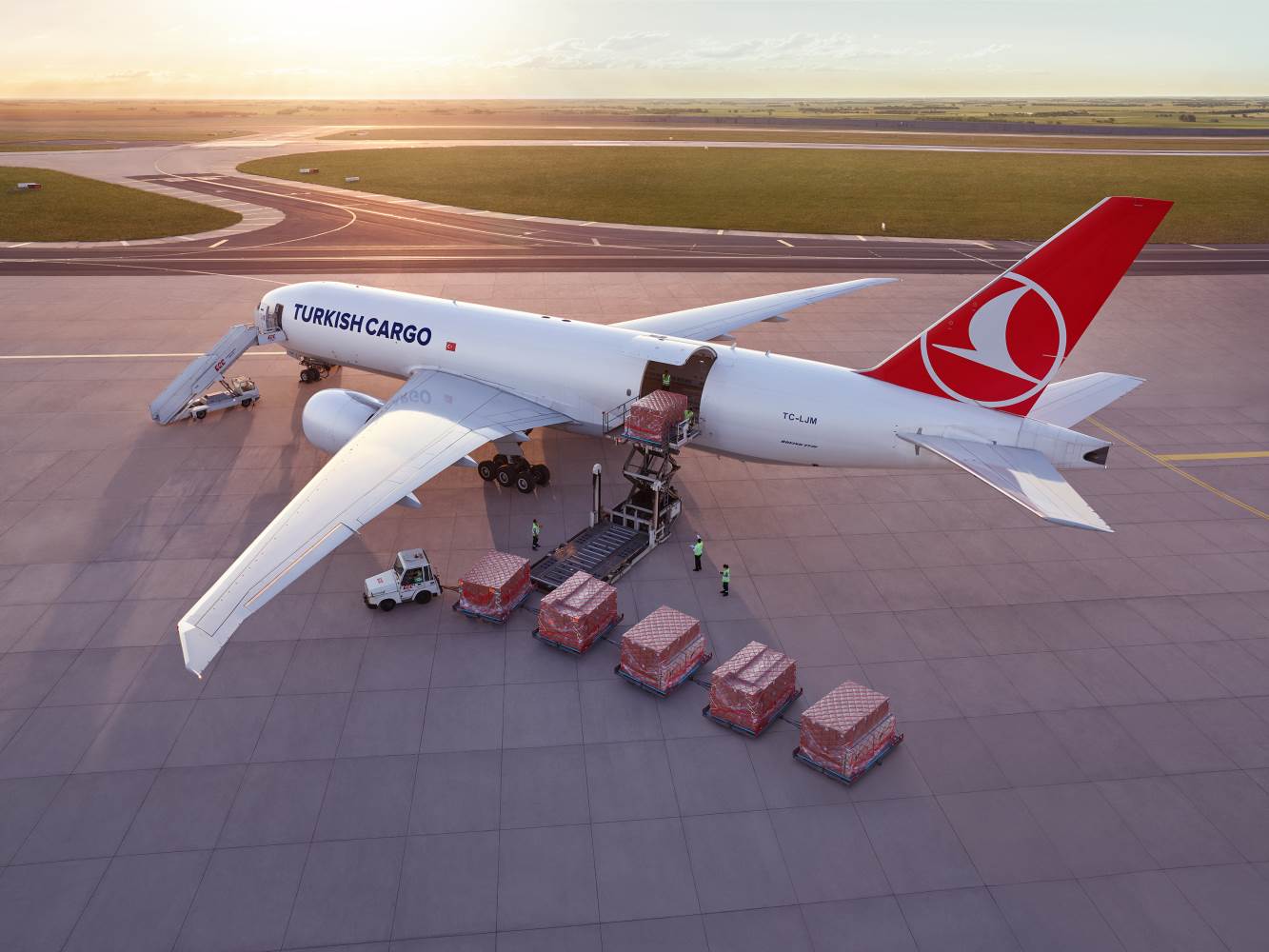


EASA issued two airworthiness directives on 24 August. One imposes immediate dispatch restrictions on 108 Airbus A350-1041s over a lightning protection non-compliance that could create an ignition source in an empty fuel tank. The other requires repetitive inspection of tail gear boxes across the Leonardo A109 family after reports of darkening oil. The procedural routes they took differ as much as their subject matter.
THE A350-1000: A CLEARANCE PROBLEM THAT BECOMES AN IGNITION RISK
Airworthiness Directive 2026-0167 applies to Airbus A350-1041 aeroplanes and takes effect on 31 August 2026, seven days after issue. Its applicability is defined not by variant but by manufacturer serial number, and the list runs to 108 individual airframes, from MSN 141 through to MSN 791. The subject headings are ATA 57 Wings, wing rib 26 modification, and an amendment to the Master Minimum Equipment List.
The causal chain EASA sets out runs a considerable distance from its starting point. During production, low clearance was identified between the left- and right-hand wing rib 26 and the wing lower cover on certain A350-1000 aeroplanes. Further investigation determined that under certain combinations of manufacturing tolerances and wing loading, intermittent physical contact between the rib 26 foot and the wing lower cover may occur. That contact is not compliant with the Electromagnetic Hazard safety design requirements, and it compromises the lightning protection layers in the affected areas.
The consequence follows from there. Uncorrected, and combined with an empty fuel tank, the condition could create an ignition source for fuel vapour, and in the event of a high-intensity lightning strike in the immediate area, could result in ignition of the fuel-air mixture in the affected tank and consequent loss of the aeroplane. It is worth noting how the risk is constructed: an empty tank is more hazardous than a full one, because it contains vapour rather than liquid, and lightning protection in a composite wing is an engineered layer rather than an inherent property of the structure. A millimetric clearance issue arising from manufacturing tolerance therefore terminates in the loss of an aircraft, through a sequence in which each step is individually unremarkable.
WHAT OPERATORS MUST DO, AND IN WHAT ORDER
The directive works in two stages. From the effective date, operators may not dispatch any affected aeroplane under any of the MMEL items listed in Airbus Flight Operations Transmission 999.0092/26 – the restrictions relating to the fuel tank inerting system. Amending the aircraft’s MMEL in line with the Major Event A350 MMEL approved on 7 August 2026 is an acceptable method of compliance with that requirement.
The modification itself must be accomplished before next flight after any of two specified maintenance procedure tasks (removal of the overpressure-protector panel assembly from the surge tank, or removal of the NACA-duct panel assembly from the surge tank) or within three months of the effective date, whichever occurs first. The sequencing is deliberate: those two tasks are the ones that open access to the affected area, so the directive requires that if the panel is off, the modification is done then rather than later. Once an aeroplane is modified, the dispatch restrictions cease to apply to it. Modification instructions are contained in Airbus Alert Operators Transmission A57P029-26 of 12 August 2026.
THE A109 FAMILY: DARKENING OIL AS AN EARLY INDICATOR
Airworthiness Directive 2026-0168 applies to Leonardo A109A, A109AII, A109C, A109E, A109K2, A109LUH, A109S (including helicopters fitted with the Trekker kit) and AW109SP helicopters, all serial numbers, and takes effect on 7 September 2026. The subject is ATA 65, tail rotor drive, tail gear box and chip detector inspection.
The trigger was routine maintenance rather than an accident. EASA records several in-service events of abnormal darkening of the tail gear box oil observed during scheduled work, with the darkening in some cases accompanied by incipient metallic contamination, suggesting abnormal wear mechanisms within the gear box assembly. Left undetected and uncorrected, the condition could lead to abnormal internal wear or failure of the tail gear box, possibly resulting in loss of yaw authority and reduced control of the helicopter.
Loss of yaw authority is among the more serious failure modes in single-rotor helicopter operation, because the tail rotor is what counteracts main rotor torque. Its loss does not degrade performance gradually; it removes the ability to hold heading, and the recovery options depend heavily on airspeed and altitude at the moment of failure. That is why an indicator as unglamorous as the colour of the oil warrants a directive: discoloured oil and metallic particles are the earliest observable signature of a wear process whose end state is not survivable in every flight regime.
GROUPS, INTERVALS AND THE TERMINATING ACTION
The directive divides the fleet by component rather than by model. An affected tail gear box is any case assembly with part number 109-0442-01, in all dashes, manufactured by Turbomecanica and carrying a serial number in the TURXXXXX series. Group 1 helicopters are those with an affected gear box installed; Group 2 are those without.
For Group 1, four maintenance actions must be accomplished during the first reference maintenance action or within 30 days of the effective date, whichever is later, and thereafter at intervals not exceeding 100 flight hours or six months, whichever comes first: inspect the oil colour through the oil level indicator; carry out a detailed inspection of the chip detector; clean the chip detector; and conduct an operational test of it. A noncumulative tolerance of 10 flight hours or 30 days may be applied to synchronise the work with other maintenance tasks. If any discrepancy is detected, corrective action must be accomplished before next flight.
Two further provisions are worth noting. Replacing an affected gear box with one that is not affected constitutes terminating action, after which the helicopter is treated as Group 2 – meaning the repetitive burden is escapable by component replacement rather than being permanent. And the directive requires reporting: where a discrepancy is found during the oil colour inspection or the operational test, the findings must be reported to Leonardo within 30 days, using the inspection report form attached to the alert service bulletin. That reporting requirement is how the manufacturer builds the data set that will determine whether the current understanding of the wear mechanism is correct.
THE PROCEDURAL CONTRAST
The most instructive thing about the two directives is not their content but the different routes by which they reached publication on the same day.
The Leonardo directive followed the standard process. It was posted on 23 July 2026 as Proposed Airworthiness Directive 26-088 and consulted until 20 August. No comments were received. It then issued in final form with an effective date fourteen days later.
The Airbus directive did not. EASA states that on the basis of the required actions and the compliance time, it decided to issue a Final AD with Request for Comments, postponing the public consultation process until after publication. Comments may be submitted until 21 September 2026, and a comment response document will be published only if any are received. The directive is in force from 31 August regardless.
That is the whole of the story in procedural terms. Consultation exists because affected parties frequently know things a regulator does not, and skipping it is a cost the agency accepts only when the delay is judged more dangerous than the loss of input. EASA reached opposite conclusions on the two cases and published both on the same morning – a reasonable illustration, for anyone who follows continuing airworthiness, of how the judgement is actually made.
Regional relevance
Both directives touch aircraft familiar to Southern African operators and passengers. Qatar Airways operates the A350 on all three of its South African routes (Johannesburg, Cape Town and Durban) under the codeshare with Airlink confirmed on 13 August, and the A350-1000 has been prominent in regional coverage since the A350-1000ULR development flights reported in July. The Leonardo A109 family, meanwhile, is widely used across the region in emergency medical, offshore support, utility and parapublic roles, where the tail gear box inspection interval will fall on operators running high-utilisation fleets.
NOTE: This article summarises two regulatory instruments for editorial purposes and is not a substitute for either. Operators, maintenance organisations and continuing airworthiness management organisations must work from the published EASA documents and the referenced Airbus and Leonardo service information. Alternative Methods of Compliance may be approved by EASA where requested and appropriately substantiated.
Source and Images: EASA Airworthiness Directive 2026-0167, EASA Airworthiness Directive 2026-0168