
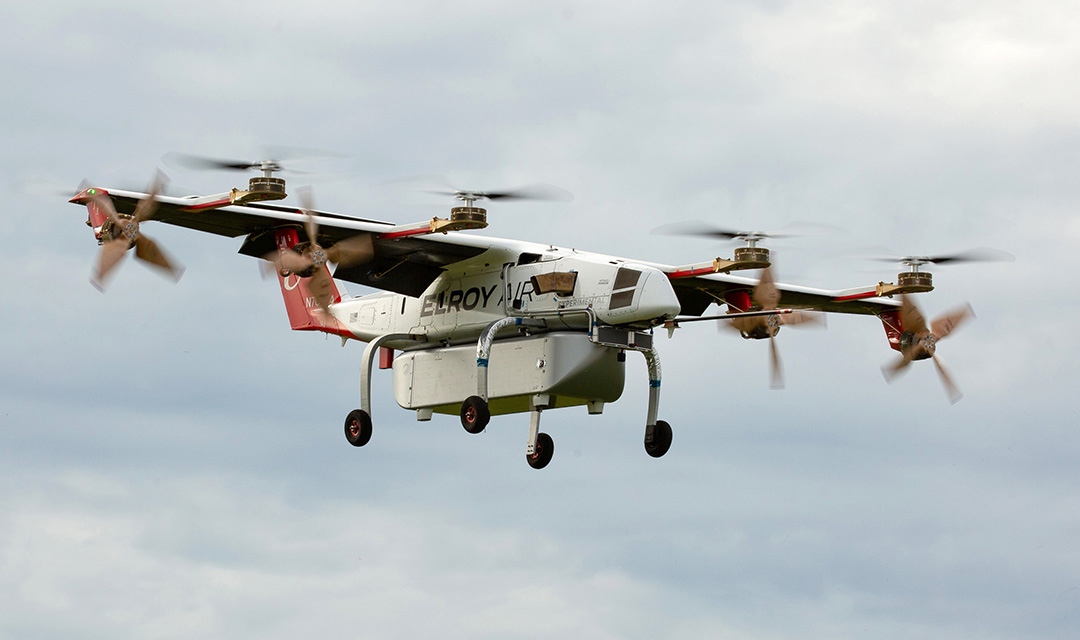
Elroy Air and the Louisiana Department of Transportation and Development have conducted hybrid-electric cargo demonstration flights at Houma-Terrebonne Airport using the uncrewed Chaparral aircraft. The FAA states it is the first remotely piloted test flight under the eIPP.
THE FIRST FLIGHT WITHOUT A PILOT ABOARD
The Federal Aviation Administration has announced that Elroy Air and the Louisiana Department of Transportation and Development conducted a hybrid-electric demonstration flight testing cargo delivery using remotely piloted aircraft at Houma-Terrebonne Airport in Louisiana. The agency states this is the first remotely piloted aircraft test flight conducted under its eVTOL Integration Pilot Program.
That qualifier matters. World Airnews Daily has reported on the eIPP repeatedly through the crewed side of the programme, including Joby’s piloted Midnight flights between Salinas and Monterey and Archer’s preparations for early operations. Those flights carried a pilot. This one did not, which means the programme has moved from demonstrating that new aircraft types can operate in the National Airspace System to demonstrating that aircraft without anyone aboard can do so.
FAA Administrator Bryan Bedford said the demonstration provides data to help turn these concepts from trial to deployment, and that the test flights show how new aircraft can expand cargo delivery options to communities nationwide and improve logistics infrastructure.
THE AIRCRAFT, AND THE MISSIONS IT IS BUILT FOR
Elroy Air used its Chaparral aircraft, a highly automated hybrid-electric vertical take-off and landing system designed to move heavy cargo by air between non-traditional sites. Andrew Clare, Chief Executive of Elroy Air, described the aircraft as built to move heavy cargo autonomously in the places that need it most, citing offshore energy platforms, industrial supply chains, disaster response and communities beyond the reach of traditional infrastructure.
The choice of Louisiana for the first uncrewed flights is not incidental to that list. The state’s offshore energy sector generates continuous demand for moving equipment and supplies to platforms with no runway, a mission currently flown almost entirely by helicopter at considerable cost and with crew exposure over water. It is also among the American states most frequently affected by hurricanes, where road access can disappear for days and the ability to deliver cargo to a site without infrastructure has immediate value. An aircraft that lands vertically, carries useful weight and requires nobody aboard addresses both cases directly.
Clare said the eIPP gives the company a clear, collaborative path for safely bringing uncrewed autonomous cargo aircraft into the National Airspace System, and described the Houma flights as the first step in that process. Louisiana Department of Transportation and Development Secretary Glenn Ledet said the partnership gives the state a meaningful role in shaping the next chapter of American aviation, and expressed pride in the opportunities the work can create for local industries, workforce and communities.
WHERE THE PROGRAMME STANDS
The eIPP was established under the Unleashing Drone Dominance Executive Order and, in March 2026, the Department of Transportation selected eight projects across 26 states to participate, with the Louisiana Department of Transportation and Development among them. The FAA states it will use what it learns from the demonstrations to identify gaps, improve procedures and support the safe integration of advanced air mobility into the National Airspace System, with Louisiana and other participants planning further test flights through the remainder of the year.
It is worth noting that Louisiana now appears twice in a week in advanced aerospace announcements, following SpaceX’s plan for a ten-pad Starship spaceport in Vermilion Parish reported by this publication in late August. Whether by design or coincidence, the state is accumulating a distinctive concentration of next-generation aviation and space activity.
Source and Images: Federal Aviation Administration