
Boeing and General Motors have signed a definitive agreement to sell HRL Laboratories — the Malibu-based research institution they have jointly owned since its founding lineage began in 1948 — to IBM, which intends to use HRL’s silicon-spin qubit expertise to accelerate its quantum computing roadmap, with both sellers retaining partnership arrangements on quantum applications.
A JOINT VENTURE SALE THAT RESHAPES TWO INDUSTRIES SIMULTANEOUSLY
Boeing (NYSE: BA) and General Motors (NYSE: GM) have announced that they have signed a definitive agreement to sell HRL Laboratories, LLC — a 50/50 joint venture between the two companies — to IBM (NYSE: IBM). Financial details of the transaction were not disclosed. The agreement initiates the regulatory review process, and the transaction is anticipated to close by the end of the third quarter of 2026, subject to customary closing conditions and regulatory approvals. Both Boeing and General Motors will continue to partner with IBM on quantum applications and advanced technology development following completion.
In a joint statement, Boeing and GM said that since its founding in 1948, HRL Laboratories had been a leader in pioneering work in physical science and engineering, and that they looked forward to IBM building on that legacy. They said that with the proposed sale, the two companies would focus their resources on their respective core businesses and on delivering the programmes and services necessary to meet their customers’ evolving needs — a framing consistent with the portfolio rationalisation both manufacturers have pursued in recent years, and one that positions the divestment as a strategic focus decision rather than a distressed disposal.
WHY IBM WANTS HRL: SILICON-SPIN QUBITS AND THE SCALING PROBLEM
IBM’s rationale is specific and technical. HRL’s expertise in silicon-spin qubit engineering complements IBM’s existing superconducting qubit architecture, and both modalities leverage state-of-the-art silicon fabrication — a shared foundation that IBM identifies as among the reasons both offer credible paths to scaling quantum technologies. Jay Gambetta, IBM’s Director of Research and an IBM Fellow, said the HRL team would help IBM push farther towards the frontiers of quantum innovation, bringing a broad portfolio of technologies that would strengthen IBM’s long-term plans across quantum computing, quantum sensing and quantum networking.
The acquisition sits within a defined IBM roadmap. The company intends to deliver IBM Quantum Starling by 2029 — projected to be 20,000 times more powerful than today’s quantum computers and capable of running 100 million quantum operations — followed in the mid-2030s by Blue Jay, projected at one billion quantum operations. In May 2026, IBM announced it would establish Anderon, described as the world’s first pure-play quantum wafer foundry, created as a standalone IBM company with support from the US Department of Commerce. IBM has indicated potential plans to develop spin qubit manufacturing through Anderon, closing the loop between the HRL acquisition and its manufacturing infrastructure strategy.
WHAT HRL BRINGS BEYOND QUANTUM: SENSORS, MATERIALS AND AEROSPACE HERITAGE
Rob Vasquez, President and Chief Executive Officer of HRL, said joining IBM was the natural next chapter for what the institution had built, and that the team had dedicated years to exploring how future quantum computers could be built at scales that today seem impossible. He said HRL now looked forward to leveraging IBM’s industry leadership and working alongside its researchers on fundamental infrastructure, with HRL’s physical and information science innovations combining with IBM’s advanced research capabilities to deliver a technology suite for commercial and government customers.
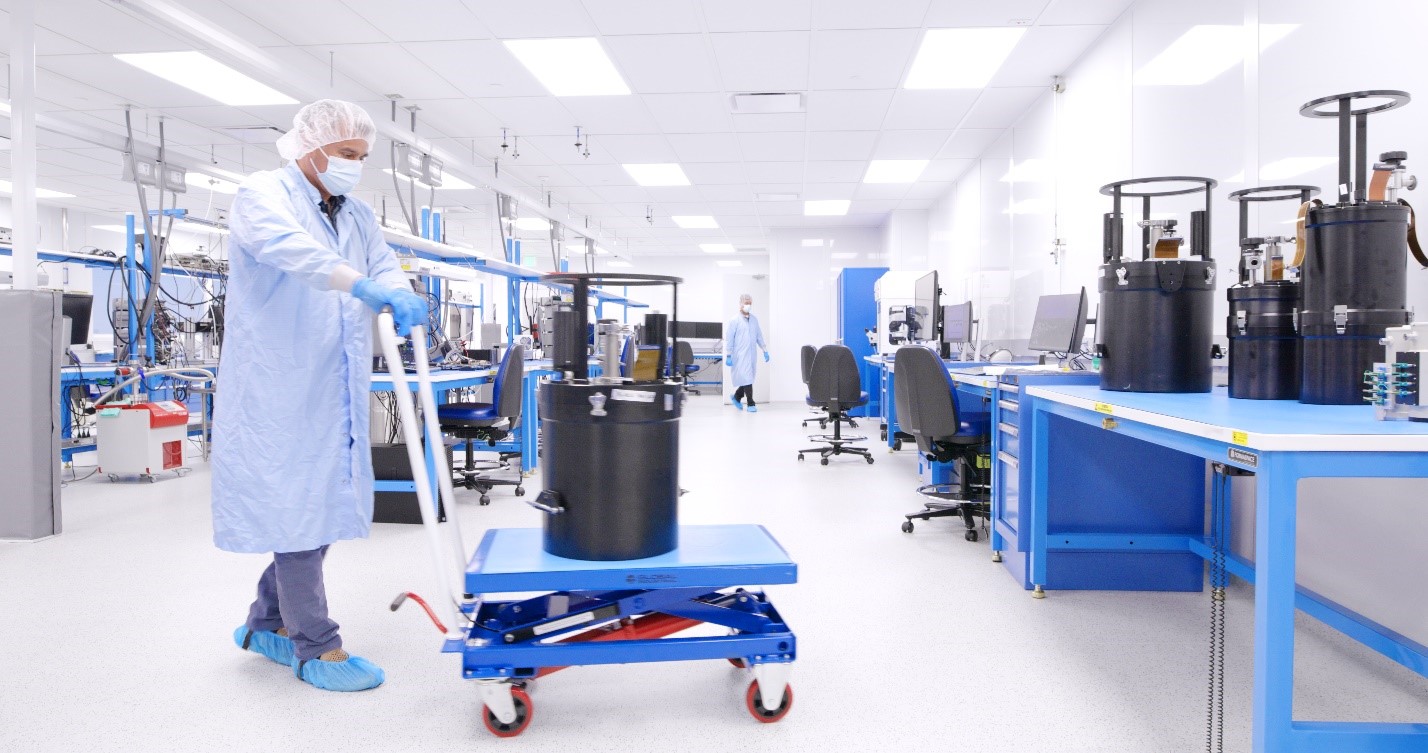
Beyond quantum computing, HRL brings deep expertise in advanced sensors, high-speed and high-power communications, electronics, advanced manufacturing and materials science, developed across decades of research and development for both commercial and US government customers. IBM specifically identifies quantum sensing as an industrialisation opportunity — ultra-precise sensors capable of detecting subtle physical phenomena for applications in life sciences, navigation, defence and scientific research — alongside HRL’s work in novel quantum materials with potential to unlock improved semiconductors and more sensitive sensors. For the aerospace sector, the transaction represents the transfer of a research institution with a substantial aerospace and defence technology portfolio out of direct aerospace industry ownership, with the continuing IBM partnership arrangements the mechanism by which Boeing retains access to the capabilities it is selling.
Source: Boeing, Images: HRL Laboratories