
Boeing and the U.S. Navy complete the first MQ-25A Stingray test flight, advancing autonomous aerial refuelling capability for carrier air wing operations.
Milestone advances carrier-based unmanned refuelling capability
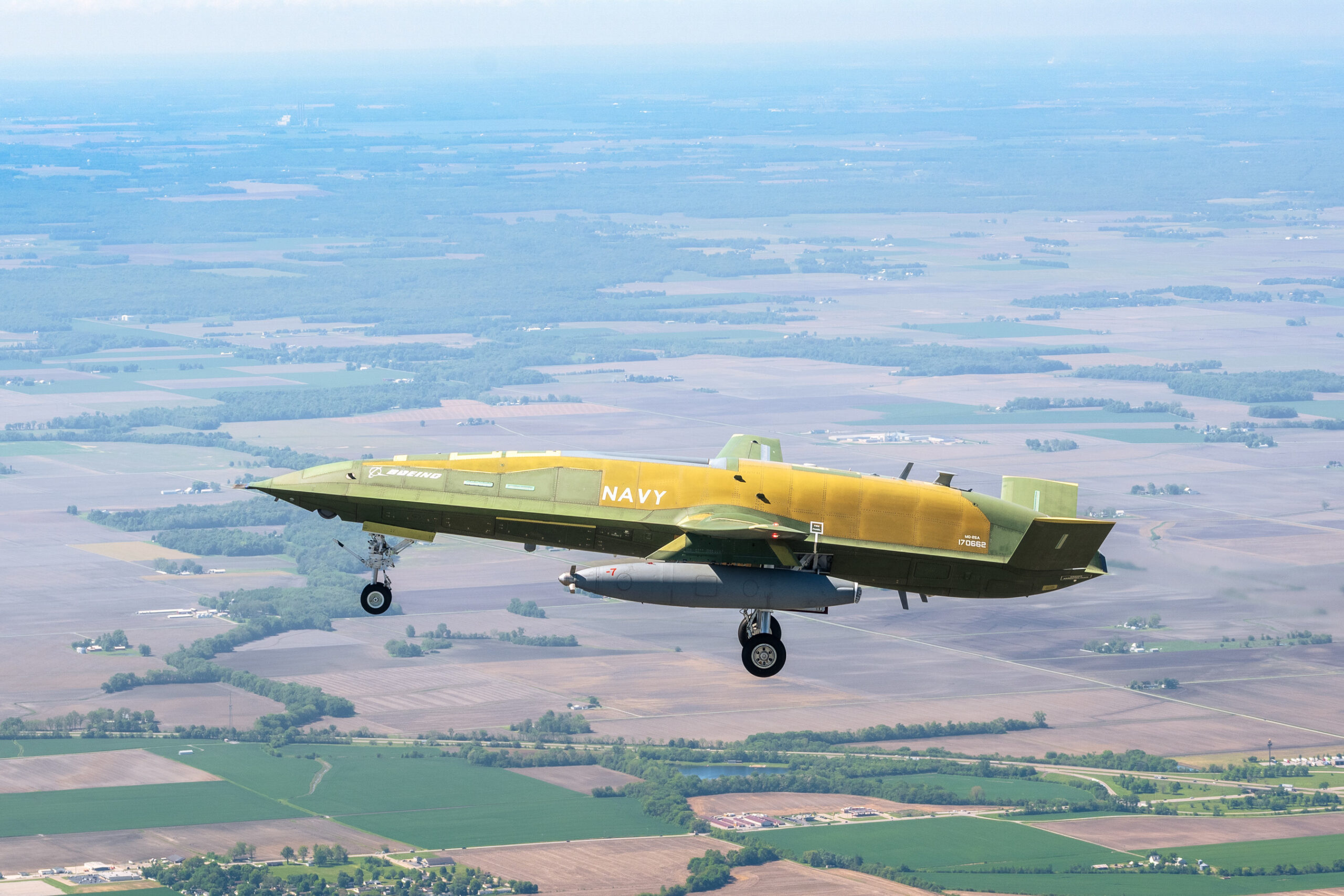
Boeing and the United States Navy have completed the first test flight of an operational MQ-25A Stingray unmanned aircraft, marking a significant step towards carrier-based integration and operational deployment.
The two-hour flight demonstrated the aircraft’s ability to autonomously taxi, take off, fly, and land, while responding to commands from a ground control station.
AUTONOMOUS SYSTEM VALIDATION
During the test, the MQ-25A executed a pre-defined mission profile, validating flight control systems, navigation performance, and integration with the Unmanned Carrier Aviation Mission Control System. The aircraft was monitored and directed by operators from a ground control station based at MidAmerica St. Louis Airport.
The programme builds on earlier testing conducted with the MQ-25 T1 prototype, representing a progression towards an operational carrier-based unmanned system.
EXTENDING CARRIER AIR WING CAPABILITY
The MQ-25A is designed to provide autonomous aerial refuelling capability for carrier-based aircraft, extending the operational range of the carrier air wing. This capability is expected to reduce reliance on crewed platforms such as the F/A-18 Super Hornet for refuelling missions, allowing them to focus on primary strike roles.
The aircraft also forms part of a broader effort to integrate unmanned systems into carrier operations, enabling future manned–unmanned teaming within naval aviation.
PROGRAMME PROGRESSION
The tested aircraft is the first of four Engineering Development Model units to be delivered under the programme’s engineering and manufacturing development contract. Further test flights are planned to continue validating system performance before transitioning to carrier qualification phases at Naval Air Station Patuxent River.
SOURCE: BOEING