

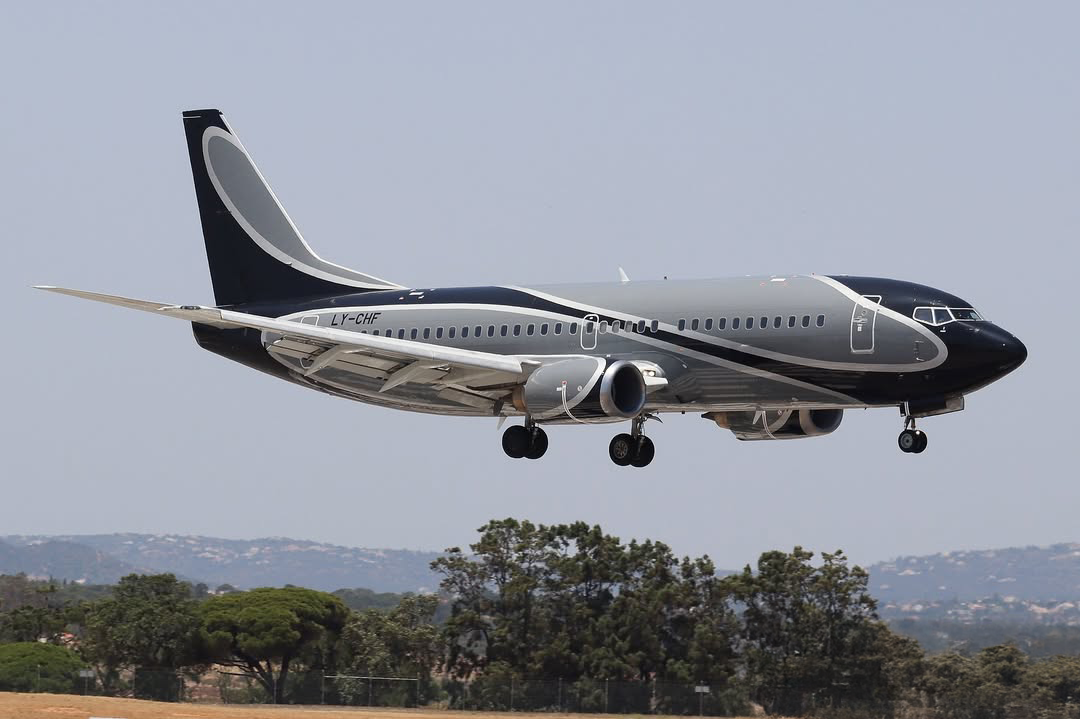
KlasJet’s Chief Commercial Officer for VIP Operations says the European charter season started slowly because the 2026 World Cup was staged in North America, pushing football camps later in the calendar – while fuel volatility drove a new category of client to charter not for luxury but for certainty of arrival.
A SEASON DISPLACED BY A TOURNAMENT
The first half of 2026 in the EMEA VIP charter market was shaped by geopolitical instability redrawing established routes, first-time users turning to private travel, and a shift from aircraft ownership toward fractional models and chartering. According to Marton Modis, Chief Commercial Officer for VIP Operations at KlasJet, the slow start to the summer season had a further and more specific cause: the 2026 FIFA World Cup was hosted in North America rather than Europe.
Modis said the summer was shaping up to be similar to the previous year but had started more slowly, with the World Cup pushing football summer camps later in the calendar and the volatile fuel situation holding things back further. The displacement is straightforward in its mechanics — European clubs rescheduled pre-season camps around a tournament staged across the United States, Canada and Mexico through June and July, and football-related charter demand followed. Operators across Europe spent June and early July waiting for the market to find its usual rhythm. Modis expects that by the end of the season flight hours will land at around the same level as the previous year, chiefly because demand is now picking up quickly.
CLIENTS BUYING CERTAINTY RATHER THAN COMFORT
The most commercially interesting observation concerns why a new category of customer is chartering. Modis said that because of what was happening with fuel prices and commercial schedules, organisations that would normally fly commercially were coming to KlasJet instead, and that this was not really about price or comfort but about knowing they would get where they needed to be, when they needed to be there.
That is a different proposition from the one the charter market has traditionally sold. A client chartering for schedule certainty rather than for the experience is buying insurance against commercial network disruption, and represents demand that exists only while that disruption persists. It is also demand that behaves differently: such clients scrutinise quotes closely and have little patience for costs that surface later. Modis said clients needed more flexibility than ever from first enquiry to wheels-up, and expected full transparency and no surprises even amid market volatility, which has changed the negotiation process.
Last-minute bookings have declined against 2025, which Modis attributes to greater aircraft availability in the market and slightly lower demand. Sports charters are the exception. As European competitions intensify, KlasJet is seeing a high volume of time-critical requests, particularly from football clubs willing to pay a premium to ensure teams arrive at qualifier fixtures rested. Repeat clients have become more price-conscious rather than trading down on aircraft type or cutting trips, with a clear trend toward conservative pricing and harder shopping for the best rate.
THE MAP MOVING EAST
Routes have remained largely consistent since 2025 with one notable shift: the Middle East has declined in popularity as a destination, reflecting the airspace concerns visible across the industry. KlasJet’s material states that at the height of the regional conflict private flight activity in the Middle East fell by close to a third year on year, and that the region has remained well below its pre-conflict baseline since. Central and Eastern Europe, and Poland in particular, has emerged as a bright spot for the fleet this summer, attracting new clients in a region that has not typically featured in VIP charter demand.
Modis expects the third and fourth quarters of 2026 to outpace the same period last year, largely because travel originally planned for early in the year was deferred by regional instability, and says music tours and private group charters are already returning as the region stabilises. KlasJet plans to reposition one of its aircraft to the Asia-Pacific region from September to test demand in a market it has not historically served.
Source and Images: KlasJet