
Eight 500-kilogram satellite platforms built by Rocket Lab for MDA Space have launched successfully from Cape Canaveral and are performing nominally on orbit. They are the first batch of 17 built under a $143 million contract supporting the replenishment of Globalstar’s direct-to-device constellation.
CONTACT ESTABLISHED WITH ALL EIGHT
Rocket Lab Corporation has announced the successful launch of eight satellite platforms it built for MDA Space, prime contractor for the replenishment of Globalstar’s existing constellation providing direct-to-device communications services and Internet of Things applications from orbit. The eight spacecraft launched on 15 August from Cape Canaveral Space Force Station at 9:12pm Eastern Time. Rocket Lab has made contact with all eight, confirmed all are performing nominally and generating power on orbit, and has begun commissioning to prepare them to extend mobile satellite services to customers globally as part of Globalstar’s network.
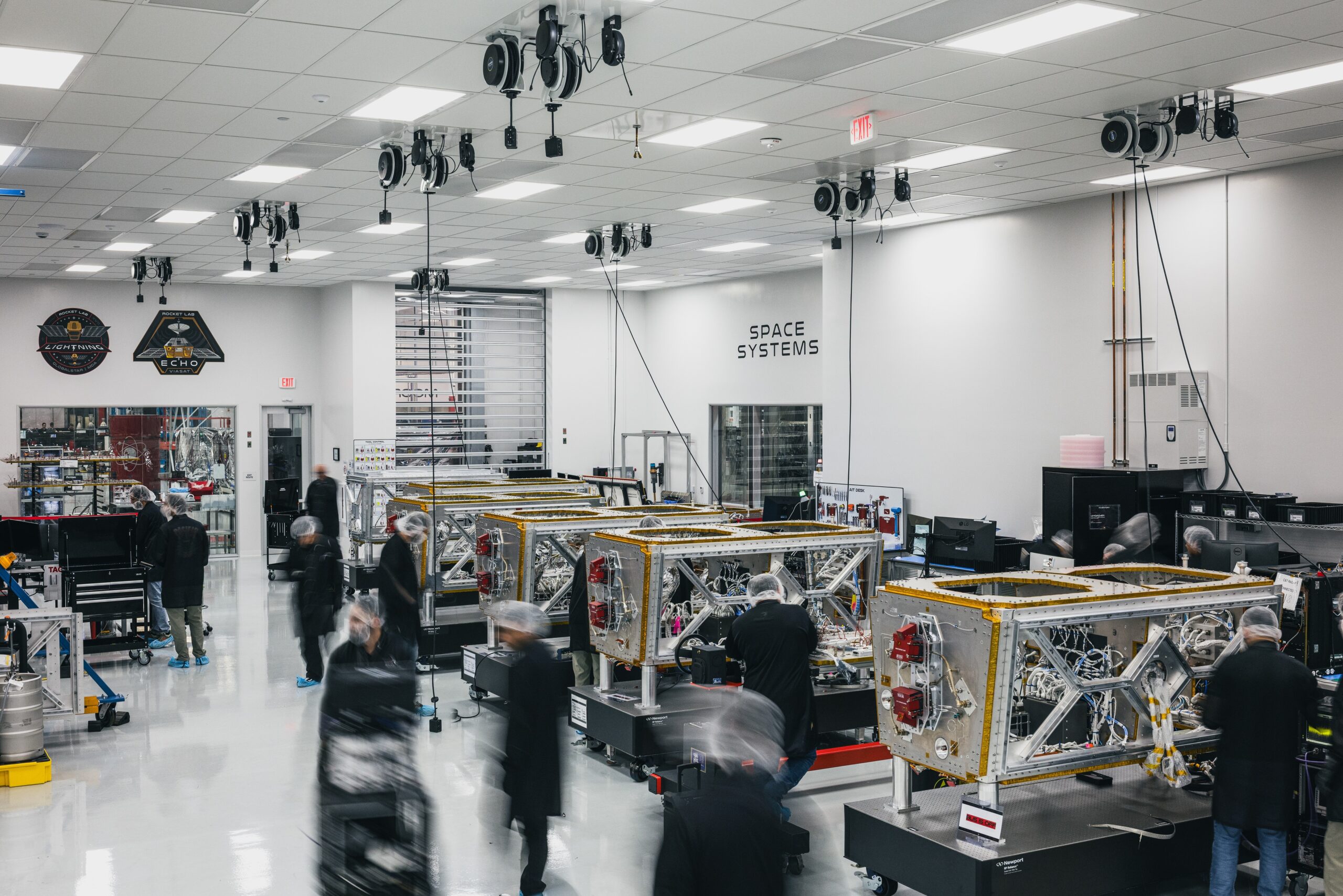
The eight are the first batch in a constellation of 17 platforms Rocket Lab is building under a $143 million contract with MDA Space. The 500-kilogram platforms are a tailored version of the company’s standard Lightning platform, built and tested at its Long Beach, California headquarters, and incorporate an in-house suite of components and subsystems including solar arrays, reaction wheels, flight and ground software, elements of the avionics suite, and telemetry, tracking and command radios.
VERTICAL INTEGRATION AS THE COMMERCIAL ARGUMENT
Sir Peter Beck, Rocket Lab founder and Chief Executive, said the platforms were a demonstration of the company’s capabilities brought to life, executing across the entire mission lifecycle from spacecraft platform design, build and testing through to on-orbit operations. He said the approach delivered the speed, reliability and agility that competitive direct-to-device constellations demand, and that with scaled manufacturing, operational expertise and vertically integrated platforms bringing cost and schedule under control, the company was positioned to be a partner of choice for what he termed the constellation economy.
The list of in-house subsystems is the substance behind that claim. Solar arrays, reaction wheels, avionics and TT&C radios are conventionally sourced from specialist suppliers, and a spacecraft builder dependent on them inherits their lead times and their cost structure. Building them internally is what allows a manufacturer to commit to schedule on a constellation programme, where the customer’s business case depends on satellites reaching orbit in a defined sequence rather than eventually.
Rocket Lab states the Lightning platform is in production for multiple other missions, including a recently awarded space domain awareness programme with the United States Space Force and the Space Development Agency’s Tranche 2 Transport Layer-Beta and Tranche 3 Tracking Layer constellations. The company’s spacecraft and satellite components have enabled more than 1,700 missions across commercial, defence and national security programmes.
Note: Statements regarding manufacturing scale, constellation support and future capability are Rocket Lab’s own and are subject to the forward-looking statements and risk factors set out in its announcement and its filings with the Securities and Exchange Commission.
Source and Images: Rocket Lab Corporation