
Tuskegee University has been awarded $550,000 in federal research funding to establish a Comprehensive Instrumentation Suite for Experimental Aerospace Measurements, supporting work on low-speed aerodynamics and flight controls for rotary-wing, fixed-wing and advanced air mobility configurations.
INSTRUMENTATION FOR FLOW PHYSICS AND MULTI-ROTOR INTERACTION
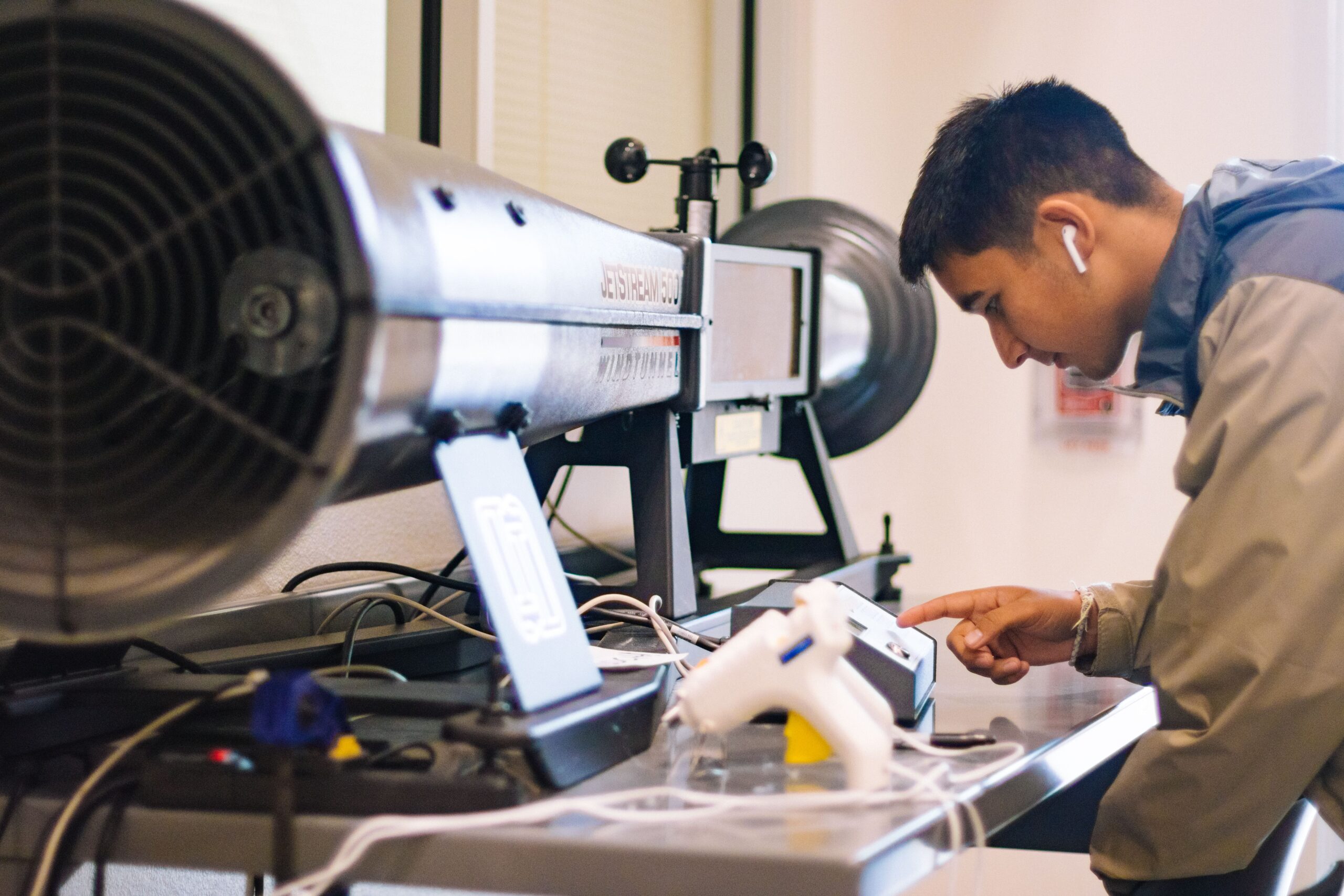
Tuskegee University has been awarded a $550,000 research grant from the United States Department of War to establish a Comprehensive Instrumentation Suite for Experimental Aerospace Measurements, known as CISEAM. The equipment order has been placed and the system is expected to arrive in early autumn. The funding supports experimental research into low-speed aerodynamics and flight controls across rotary-wing and fixed-wing aircraft configurations, including emerging technologies in advanced air mobility.
The capabilities the instrumentation is intended to provide are specific. The suite will support non-intrusive flow-field measurement, allowing complex aerodynamic phenomena to be characterised without physically disturbing the flow being measured — a significant constraint in rotorcraft and multi-rotor work, where an intrusive probe alters the very behaviour under study. It will enable capture of highly dynamic flow fields to investigate underlying flow physics, and analysis of interactions among multiple rotor systems. It also includes a visual tracking system measuring uncrewed aerial system responses to control inputs such as thrust vectoring, supporting the development of flight control strategies.
The multi-rotor interaction capability is the element most directly relevant to advanced air mobility. Electric vertical take-off and landing designs typically distribute lift across a number of rotors, and the aerodynamic interference between those rotors — and between rotors and the airframe — is among the least well characterised aspects of the configuration. It affects control authority, noise, efficiency and, in failure cases, the aircraft’s behaviour when one unit is lost. Experimental data on those interactions is a prerequisite for certification work that regulators are currently developing in parallel with the vehicles themselves.
THE RESEARCH TEAM AND INSTITUTIONAL OBJECTIVE
The grant application was led by Tuskegee University’s Aerospace Science Engineering Department. Dr M. Javed Khan, Professor and Head of the department, is principal investigator, with Assistant Professor Dr Zafar Bangash as co-principal investigator and Assistant Professor Dr Shuting Yang as faculty collaborator. Dr Khan said the university was poised to further expand its research capabilities, which he described as critical to efforts to achieve Carnegie R2 and eventually R1 status, and to continue contributing to innovations shaping the future of aerospace engineering and advanced air mobility systems. He said the investment would strengthen Tuskegee’s position as a leader in aerospace education and research while expanding opportunities for undergraduate and graduate students.
The Carnegie classification reference indicates the institutional stakes. The Carnegie Classification of Institutions of Higher Education designates research activity levels, with R1 denoting very high research activity and R2 high research activity. Movement between categories depends substantially on research expenditure and doctoral output, which makes externally funded instrumentation of this kind a direct input to the classification objective as well as to the research itself. Dr Mark A. Brown, president and chief executive of the university, said that for more than a century Tuskegee had answered the nation’s call through service, scholarship and innovation, and that the grant ensured that legacy would continue as students and faculty help shape the future of aerospace, national security and technological advancement.
WHY THE AWARD LANDS WHERE IT DOES
Tuskegee occupies a distinctive position in American aerospace education that provides the context for the award. According to the university’s own published departmental information, its Aerospace Science Engineering programme was established in 1983, accredited by the Engineering Accreditation Commission of ABET, and was the first at a “Historically Black College or University” to offer an accredited bachelor’s degree in the field. It remains the only such accredited programme at an HBCU. The university is also the only HBCU offering Reserve Officers’ Training Corps programmes across all military branches, including the Space Force, and hosts an existing Department of Defense Aerospace Education, Research and Innovation Center within its College of Engineering — an established relationship into which the new instrumentation grant fits rather than a first engagement.
The institutional history runs deeper still. Tuskegee was founded in 1881 under Booker T. Washington, and during the Second World War the site hosted the training of the Tuskegee Airmen, the first African American military aviators in the United States armed forces. The university has more recently launched a Bachelor of Science in Aviation Science, with students training at Moton Field — the airfield where the Airmen themselves trained. The CISEAM award adds experimental research infrastructure to an institution whose connection to American military aviation is both unusually long and unusually specific.
Source: Tuskegee University, July 2026. All intellectual content in the original release remains the property of Tuskegee University (© 2026 Tuskegee University)., Images: Pexels – Jeswin Thomas