
The International Air Transport Association (IATA) has confirmed that contactless, biometric-enabled international travel is technically achievable, following a series of successful Proofs of Concept (PoCs) conducted across Europe and Asia-Pacific.
DIGITAL IDENTITY ENABLES PAPERLESS TRAVEL
The trials demonstrated that digital identity systems can replace traditional paper-based travel documentation, enabling passengers to move through airport processes without repeatedly presenting passports or boarding passes.
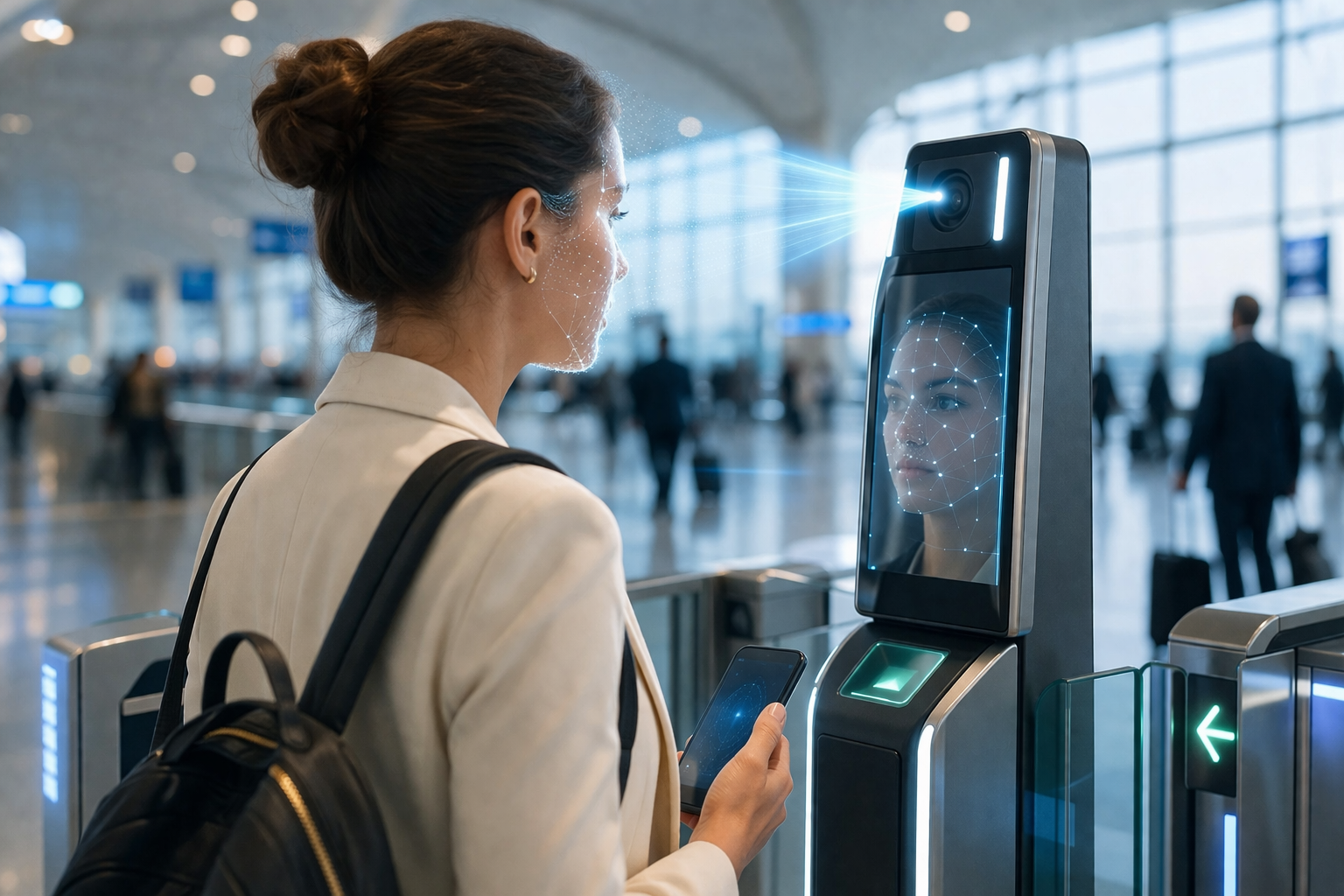
Passengers used digital identities stored in mobile wallets, combined with biometric verification, to complete check-in, security, and boarding processes in a contactless environment.
INTEROPERABILITY PROVEN ACROSS SYSTEMS
A key outcome of the trials was the successful interoperability between systems operated by airlines, airports, and governments.
The PoCs showed that digital identity solutions—including global platforms such as Apple Wallet and Google Wallet, as well as national programmes like India’s Digi Yatra—can function together within a single journey.
This interoperability enables passengers to share identity data securely in advance, reducing the need for repeated checks at multiple touchpoints.
BIOMETRIC VERIFICATION STREAMLINES PASSENGER FLOW
Biometric verification was shown to be capable of replacing manual document checks across airport processes, supporting a “tap-and-go” passenger experience.
A single digital identity can be reused throughout the journey, allowing travellers to move seamlessly between airport checkpoints while maintaining secure identity verification.
TRIALS ACROSS MULTIPLE ROUTES AND OPERATORS
The PoCs included trials on international and domestic routes, involving multiple airlines and operational models:
- Japan Airlines tested contactless travel across a multi-leg journey involving Tokyo, Hong Kong and a European airport
- Air New Zealand trialled an airline-managed digital identity system on its Auckland–Hong Kong route
- IndiGo demonstrated interoperability between different digital identity providers within a single airport environment
These trials confirmed that digital identity systems can operate across multiple carriers, airports, and jurisdictions.
GOVERNMENT ROLE CRITICAL FOR GLOBAL IMPLEMENTATION
While the technology has been validated, IATA emphasises that global adoption will depend on coordinated government action.
Key requirements include the issuance of Digital Travel Credentials (DTCs), the ability to accept and verify credentials issued by other states, and the development of frameworks to support large-scale interoperability.
The trials align with international standards, including those developed by ICAO, ISO, OpenID and W3C, supporting the potential for global implementation.
INDUSTRY MOVES TOWARDS DIGITAL TRAVEL FRAMEWORK
The findings indicate that the aviation industry is operationally ready to transition towards digital identity-based travel processes.
However, the pace of implementation will depend on regulatory alignment and the willingness of governments to adopt and integrate digital identity frameworks into border and aviation systems.
SOURCE: IATA IMAGE: WAN ©